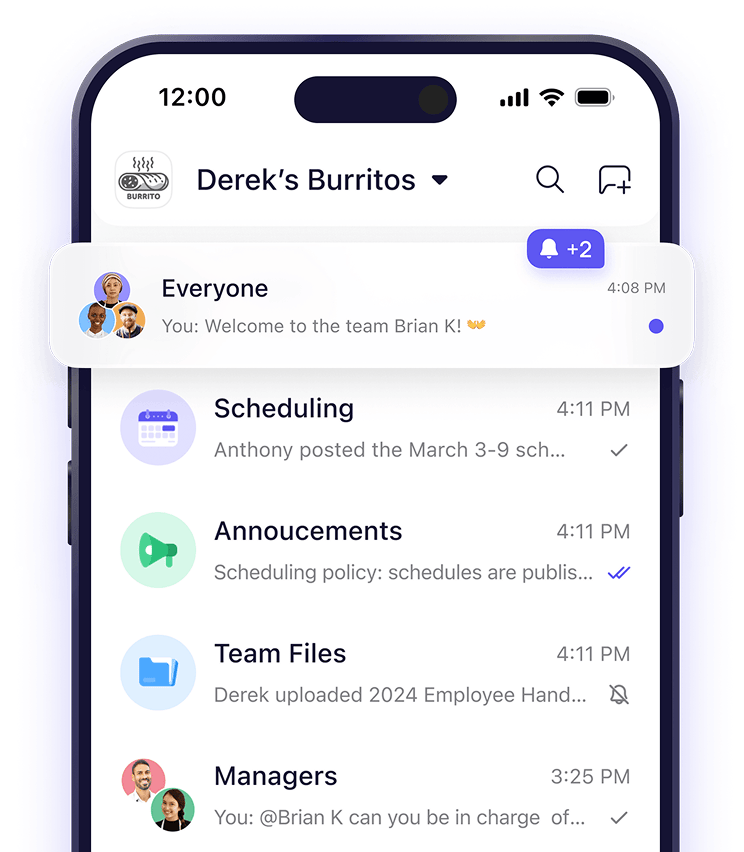
An employee's first day is their initial working day with your company. It's when they complete required paperwork, meet the team, receive initial training, and form lasting impressions about your workplace. For shift-based businesses, a well-executed first day is the foundation for retention. A chaotic one sends new hires job-hunting by week two.
Why the First Day Is Make or Break
Research from Glassdoor shows that organizations with strong onboarding processes improve new hire retention by 82%. The first day is where that process starts or fails.
The reality: Your new line cook who shows up to find nobody knows she's starting, no uniform ready, and no clear plan for the day is already updating her resume.
The goal: She arrives to find a prepared workspace, a welcoming team, clear expectations, and a structured plan. She leaves excited to come back tomorrow.
Before They Arrive: Pre-Day Preparation
The first day starts before the employee walks in.
The Week Before
Confirm start details: Call or text the new hire a few days before to confirm:
- Start date and time
- Where to report (which entrance, who to ask for)
- What to bring (ID for I-9, banking info for direct deposit)
- What to wear (or when they'll receive their uniform)
- Where to park
Prepare workspace: Have ready:
- Uniform or name tag if applicable
- Locker assignment
- Tools or equipment they'll need
- Login credentials for systems
- Access to Breakroom or scheduling platform
Notify the team: Tell existing employees someone new starts tomorrow, their name, and their role. Your current staff shouldn't be surprised.
Assign an onboarding buddy: Identify an experienced, friendly employee to guide the new hire through their first days.
Create a schedule: Plan what happens hour by hour on day one. Don't wing it.
Day One Morning
Arrive early: The manager should be there before the new hire arrives.
Clean workspace: First impressions matter. A cluttered, dirty workspace signals low standards.
Hour One: Welcome and Paperwork
The Greeting (15 minutes)
Warm welcome: Greet them at the door. Use their name. Smile. Show you're glad they're here.
Facility tour: Quick walkthrough of:
- Bathrooms
- Break room
- Time clock location
- Emergency exits
- Where they'll work
- Supply storage
Keep it brief. They won't remember everything, but they'll know the basics.
Required Forms (45 minutes)
Complete federal and state-required paperwork. According to the IRS, certain forms must be completed on or before the first day of work.
I-9 Employment Eligibility Verification: Must be completed within three business days of hire. Review their documents in person. Store separately from personnel file.
W-4 Federal Tax Withholding: Determines federal income tax withholding.
State and local tax forms: Requirements vary by location.
Direct deposit authorization: Get banking information for payroll.
Emergency contact form: Who to notify if something happens at work.
Benefit Enrollment form: Include forms for any benefits the employee may be eligible to receive.
Employee handbook acknowledgment: Proof they received and understand company policies.
Provide the employee handbook itself for them to take home and read.
Additional agreements: Non-disclosure, non-compete, or arbitration agreements if your business uses them.
Walk through each form: Don't just hand them a stack. Explain what each form is for and answer questions.
Hour Two: Team Introductions and Culture
Meet the Team (30 minutes)
Introduce the new hire to everyone they'll work with regularly. Don't rush past this.
For each person, share:
- Their name
- Their role
- How long they've been with the company
- One personal detail if appropriate ("Sarah's our morning shift lead and knows everything about the coffee machine")
This helps new hires remember names and understand the team structure.
Company Culture Overview (30 minutes)
Explain what matters here:
- Mission and values
- Customer service philosophy
- Communication style
- How problems get solved
- What success looks like
Your hotel's new front desk associate needs to understand that you prioritize guest experience over rigid rule-following, or that you have a speak-up culture where everyone's input matters.
Hours Three and Four: Systems and Processes
Essential Operations Training
Timekeeping: How to clock in and out, how to track hours worked, importance of accurate time records.
Scheduling: How to read the schedule, how to request time off, how to request shift swaps, how to handle call-outs.
Communication: How the team communicates (group text, Breakroom app, bulletin board). Show them how to access and use systems.
Break and meal periods: When breaks occur, how long, whether paid or unpaid, where to take breaks.
Pay information: Pay schedule, pay dates, how to access pay stubs, overtime policy.
Workplace Safety
OSHA requires safety training for many positions. Cover:
- Hazard awareness specific to their role
- Emergency procedures (fire, medical emergency)
- Location of first aid supplies
- Who to report safety concerns to
- PPE requirements if applicable
For your warehouse worker, this includes forklift safety zones and proper lifting techniques. For your restaurant server, it's hot plate handling and wet floor awareness.
Hour Five and Beyond: Initial Job Training
Shadow Experienced Employee
Pair the new hire with their onboarding buddy. The new employee observes:
- How tasks are performed
- Customer interactions
- Problem-solving in real situations
- Pace and rhythm of the work
No pressure to perform yet: Day one is about watching and learning, not being productive.
Answer Questions
Check in regularly throughout the day. "How are you feeling? Any questions so far?"
Create psychological safety. Tell them: "There are no dumb questions. Everyone asks questions their first week. That's normal."
End of Day: Set Up for Success
Final 15 Minutes
Review tomorrow's plan:
- What time to arrive
- What they'll be doing (more shadowing, beginning hands-on training)
- What to bring or wear
Answer final questions: Give them space to ask anything before they leave.
Express confidence: "You did great today. See you tomorrow at 8am."
Manager Tasks After They Leave
Update personnel file: File all completed paperwork properly.
Note observations: Document anything important (confused by certain processes, great attitude, needs extra help with X).
Prepare for day two: Ensure onboarding buddy is scheduled, training materials are ready, next steps are clear.
Follow up if needed: Text or call that evening if you forgot to cover something important.
Common First Day Mistakes
Starting with overwhelm: Eight hours of information on day one results in 10% retention. Spread training across days and weeks.
No plan: "Just shadow Mark and see what he does" isn't a first day plan.
Forgetting they start: New hire shows up and nobody knows they're coming. This happens more than you'd think.
Incomplete paperwork: Missing I-9 documents or incomplete W-4s create payroll problems.
Isolation: Leaving new hires to "figure it out" alone signals you don't care.
Expecting productivity: They're not there to help you short-staffed on day one. They're there to learn.
No lunch or breaks: In the rush of first day activities, don't forget to feed them or give them breaks.
Information without context: Showing them how to use the POS system without explaining why it matters or how it fits into their role.
Making It Personal
Generic onboarding feels generic. Small touches matter:
Welcome message: A handwritten note from the owner or manager welcoming them to the team.
Desk/station setup: Their name on their locker or workstation if possible.
Team lunch: Take the new hire and a few team members to lunch if timing allows.
Small welcome gift: Company t-shirt, water bottle, or other branded items.
Your new salon stylist who arrives to find her station set up with her name on it and a welcome card from the team feels valued immediately.
The Bottom Line
The first day sets the tone for the entire employment relationship. A structured, welcoming, organized first day shows new employees they made the right choice. A chaotic one confirms their suspicion that you don't have it together.
Prepare before they arrive, complete paperwork efficiently, introduce them to the team properly, train on essentials, and end by setting them up for day two success. That formula works whether you're onboarding a dishwasher or a department manager.
The first day is your one chance at a first impression. Make it count.