
The first call-out of the morning always hits hard. Your shift starts in two hours, and now you're scrambling to find coverage for someone who texted at 6 AM saying they can't make it. By the time you've finished calling around, three more messages have come in.
Most absence management strategies focus on the wrong problem. They track absences, calculate rates, and create policies for reporting call-outs. That's useful, but it's reactive. The US Bureau of Labor Statistics reports the national absence rate hit 3.2% in 2024, costing American businesses $225.8 billion annually. Those numbers don't capture the real damage: managers spending hours on last-minute coverage, reliable employees burning out from extra shifts, and customer service suffering when you're constantly understaffed.
The absence management problem isn't tracking who's missing. It's the communication breakdown that happens before anyone calls out.
The scheduling-absence connection nobody talks about
Here's what most absence management discussions miss: scheduling inconsistency directly creates absences.
Research analyzing more than 28 million time cards for retail shift-based workers found that in 37% of shifts, the schedule was either on a different day than the employee worked previously or the start time differed by more than an hour. In these inconsistent shifts, 16% of workers were late or absent.
That's no coincidence. When employees don't know their schedule until a few days beforehand, when shift times keep changing, when they can't plan childcare or transportation, absences become inevitable. 56% of service organization employees receive schedules one week or less in advance, but Fair Workweek laws in cities like Chicago, New York, Philadelphia, San Francisco, and Seattle mandate 10-14 days advance notice.
The absence management solution here isn't just better tracking. It's consistent scheduling that lets employees actually plan their lives.
What "manual absence tracking" actually costs
More than half of large employers with over 1,000 employees still use manual or no systematic process to manage absenteeism. That sounds absurd until you remember what "manual" looks like in practice: texts to a manager's personal phone, voicemails that don't get checked until mid-shift, group chats where call-outs get buried under other messages, handwritten logs that nobody reviews until there's a problem.
The real cost isn't the time managers spend updating spreadsheets. It's what doesn't happen because of that system.
Managers can't spot patterns when absence data lives across text threads, notes apps, and memory. They can't identify that someone always calls out Mondays after closing shifts, or that absences spike around specific holidays, or that one location has twice the call-out rate of another. Companies using attendance tracking software have seen almost 20% reduction in absence rates because automated systems make patterns visible.
Manual tracking also means no documented proof when you need it. When an employee disputes how many shifts they missed, when unemployment claims require absence records, when you need to demonstrate consistent enforcement of policies across all team members, that documentation missing from the employee file becomes a liability.
The communication problem disguised as an absence problem
Most absence management policies focus on what happens after someone calls out: how much notice is required, what documentation you need, what the consequences are for excessive absences. Those policies matter, but they're downstream from the actual problem.
Employees call out at the last minute because they don't have better options for communicating scheduling conflicts. They don't request time off in advance because the process is unclear or cumbersome. They come to work sick because they're not sure if they'll be believed. They stop showing up entirely because nobody followed up the last three times they had attendance issues.
The communication gap creates absence problems at multiple levels:
Employees don't know how to properly request time off, so they call out sick instead. Managers don't have visibility into who's available for coverage, so they can't quickly fill gaps. Above-store leadership can't identify where overtime is being used as a bandage solution. Team members who pick up extra shifts don't get recognized, which reduces willingness to help next time.
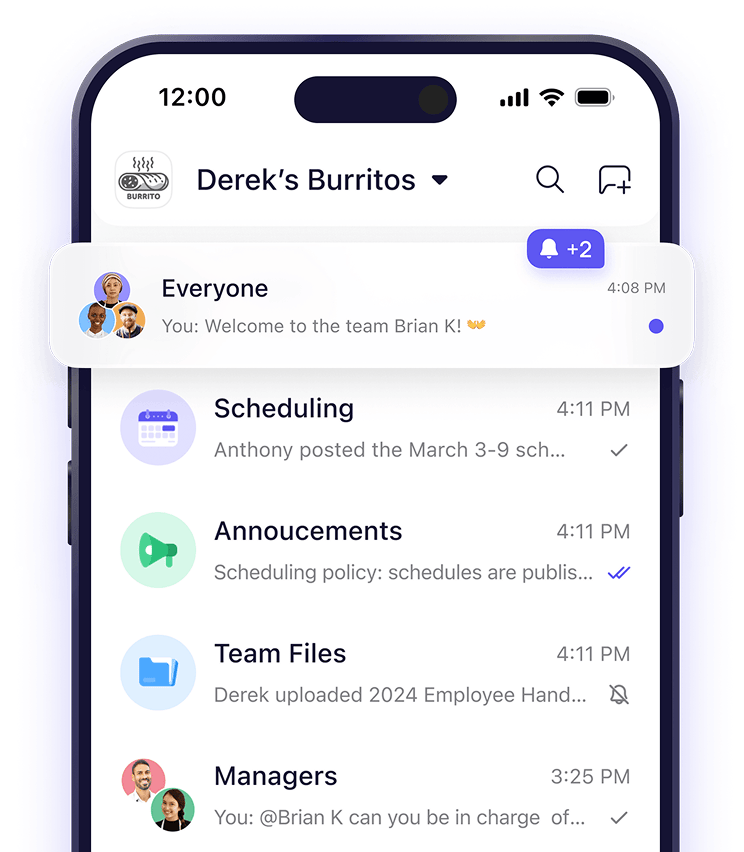
When Great Clips locations used Breakroom Chat for team communication, they created transparent channels for shift swaps, time-off requests, and coverage needs. That wasn't absence management software. It was total communication infrastructure that prevented absences from happening in the first place.
What actually reduces absences
The absence management market is growing from $320.25 million in 2024 to a projected $742.87 million by 2033, which tells you something about how widespread the problem is. But throwing technology at absence tracking without addressing root causes just gives you expensive spreadsheets.
Here's what works:
Advance scheduling with consistency. Post schedules 14+ days in advance on the same day each week. Use templates for recurring patterns. When changes are necessary, communicate them immediately through channels everyone actually checks. This alone removes the scheduling conflicts that account for a significant percentage of call-outs.
Self-service shift swaps with manager approval. Let employees find their own coverage through a system where they can see who's available, propose swaps, and get manager sign-off without playing phone tag. This turns "I can't work Friday" from a call-out into a solved problem before the shift.
Clear time-off request process. Make requesting vacation, personal days, or schedule changes straightforward. If the process requires finding your manager during their shift, filling out a form in an office, or waiting days for approval, people will just call out instead.
Immediate notification systems. When someone does call out, managers need to know instantly, not when they check their phone an hour later. Automated notifications let you start finding coverage immediately rather than discovering you're short-staffed when the shift starts.
Pattern visibility for intervention. Track absences in ways that surface trends: employees who always miss specific shift types, locations with significantly higher call-out rates, times of year when absences spike. This lets you have conversations before someone reaches termination territory.
The study that found 17% drop in absence rates among manufacturing organizations using text-based absence tracking didn't succeed because text is revolutionary technology. It succeeded because employees could report absences through familiar technology without downloading apps, remembering logins, or filling out forms. Reducing friction in the reporting process meant better data and faster response times.
The frontline reality
Frontline workers face distinct absence management challenges. Healthcare support occupations have the highest absence rate, followed by community and social service occupations at 4.2%. These aren't desk jobs where someone can work from home when slightly under the weather. They're roles where physical presence is required and burnout is constant.
Research on frontline workers shows 56% of organizations are experiencing higher turnover than historical averages, with 49% expecting it to increase. Women frontline workers are 50% more likely than men to report declines in well-being. The combination of inconsistent scheduling, physical demands, safety risks, and lack of flexibility creates a perfect storm for absences.
When 101 Express reduced employee churn by 43%, they did it by implementing unified communications that worked for employees ages 20-70 with varying tech comfort levels. The absence management benefit wasn't the primary goal, but better communication naturally reduced the conflicts and miscommunications that create absences.
Beyond the call-out
The real shift in absence management thinking is moving from "how do we handle absences" to "how do we prevent unnecessary absences."
Some absences are genuinely unavoidable—illness, emergencies, family obligations. Women have an absence rate of 4% compared to men's 2.6%, largely because of caregiving responsibilities. Employees with poor mental health take four times more unplanned absences than those with good mental health—about 12 days versus 2.5.
But a significant portion of absences stem from scheduling inflexibility, communication failures, and employees feeling disconnected from their workplace. Those are fixable.
Track absences, yes. Calculate rates, implement policies, require documentation where appropriate. But recognize that absence management starts with the systems you build for schedule transparency, communication access, and making it easy for employees to handle conflicts before they become call-outs.
The absence problem you're trying to solve might not be an absence problem at all.