
Nobody wants to work the graveyard shift. Your Saturday night crew is always short-staffed. Holiday coverage becomes a negotiation nightmare every single year.
When certain shifts are consistently hard to fill, operations suffer. Service quality drops during off-hours. Your best employees burn out covering gaps. Managers spend hours every week scrambling to plug holes in the schedule instead of actually managing the business.
Shift differentials solve this problem by compensating employees more for working the hours nobody wants. When implemented correctly, they transform your hardest-to-fill shifts into opportunities your team actually wants. This guide breaks down exactly how to structure shift differential pay that gets you reliable coverage without exploding your labor cost.
Why Shift Differentials Matter for Operational Stability
The cost of poor coverage on difficult shifts shows up in ways most managers don't calculate. When you can't fill a night shift, someone has to cover it. Usually that means a manager working a double, an exhausted employee picking up overtime, or running short-staffed and watching service quality crater.
A single understaffed shift costs you in immediate ways: overtime premiums of 1.5x regular pay, lower productivity from fatigued workers, customer complaints from slow service, and safety incidents that happen when tired people make mistakes.
The recruitment and retention impact matters more. SHRM research shows the average cost to replace an hourly employee is $1,500 for recruiting, interviewing, training, and the amount of lost productivity. Employees who consistently get stuck with undesirable shifts without additional compensation leave faster. Your turnover rate on night shifts and weekends typically runs 20-30% higher than day shifts.
Shift differentials cost you 10-20% more in labor for difficult shifts. But losing good employees and running understaffed costs significantly more. A restaurant that pays an extra $2/hour for closing shifts might spend $400 more per week. Replacing three employees who quit because they're tired of always closing costs $4,500.
Healthcare facilities learned this decades ago. According to a Society for Human Resource Management study, 70% of hospitals offer shift differentials for evening shifts and 89% for night shifts, with average premiums of $2.75 for evenings and $4.25 for nights. The reason is simple: patient care can't stop at 5 PM, and paying more for difficult hours costs less than the alternatives.
Types of Shift Differentials That Actually Work
Different industries and operational needs require different approaches to shift differential pay. The key is matching your premium structure to your specific coverage challenges.
The pattern across successful implementations: specificity matters more than generosity. A clearly defined differential structure that everyone understands works better than a complicated system that requires managers to explain the math every time.
How to Calculate Fair Differential Rates
Setting rates that are too low wastes money because they don't change behavior. Setting rates too high damages your margins. The right rate balances what it takes to motivate your team, what competitors pay, and what your budget can sustain.
Bureau of Labor Statistics data shows the median shift differential in healthcare is $2.43 per hour for evening shifts and $3.71 for night shifts. Manufacturing pays slightly higher at $2.85 for evenings and $4.15 for nights. Retail and hospitality typically pay $1.50-$2.50 for closing and weekend shifts.
Your local labor market matters more than national averages. Call three competitors and ask what they're paying. Check job postings for shift premium information.
Percentage versus flat rate approaches each have advantages. Percentage-based differentials scale with wage increases automatically. If you pay a 15% night differential and give everyone a $1 raise, the differential increases proportionally. Flat rate differentials are simpler to communicate. Telling employees "you get an extra $3 per hour for closing" is clearer than explaining percentages. The tradeoff: you need to review flat rates annually to prevent inflation from eroding their value.
Here's the math for a retail supervisor at $18/hour base:
Implementation Strategies That Get Results
Rolling out shift differentials requires more planning than just announcing new rates.
Conduct a coverage gap analysis first. Track your actual staffing levels versus requirements for every shift over 4-6 weeks. Document when you're running short-staffed, when managers have to cover gaps, and when you're paying overtime. Quantify the cost.
Survey employee preferences systematically. Ask which shifts they prefer, which shifts they would regularly work for additional pay, how much extra per hour would make undesirable shifts acceptable? Some employees actively prefer night shifts because of childcare schedules or simply being night people. Your goal is finding enough people willing to make undesirable shifts work at a rate your budget can handle.
Test and pilot programs. Start with your most critical coverage gap. If Sunday mornings are impossible to staff, implement a Sunday differential first. Run it for 60-90 days and track whether coverage improves, you reduce manager overtime, customer satisfaction improves during those hours, and what the total cost increase is.
Communicate strategically in your rollout. Announce the program at least two weeks before implementation with clear written documentation. Explain exactly which hours qualify, how much the premium is, how it appears on paychecks, and why you're implementing it. Address fairness concerns immediately: why don't day shifts get premiums, do employees working undesirable shifts before the policy get retroactive pay, can employees request to switch to premium shifts?
Dn’t forget about legal compliance. Under federal FLSA rules, shift differentials are not required, but when paid they must be included in calculating overtime rates for non-exempt employees. If an employee works 45 hours and earns $15/hour base plus $2/hour night differential for 30 hours, their regular rate for overtime calculation is $16.33 (weighted average), not $15.
Common Mistakes That Waste Money
How Modern Scheduling Software Simplifies Shift Differentials
Managing shift differentials manually creates opportunities for costly errors. Payroll mistakes where differentials aren't calculated correctly lead to labor board complaints. Managers forgetting to note differential-eligible hours create gaps.
Automated scheduling systems eliminate these problems by building differential rules directly into your scheduling and payroll processes. When you create a shift from 11 PM to 7 AM, the system automatically applies your night differential. When an employee clocks in, their timecard automatically applies the premium rate.
Fairness in distribution becomes transparent. Instead of managers playing favorites, scheduling software can distribute premium shifts equitably based on seniority, availability, or rotation rules you define. Employees see upcoming premium shift opportunities and can volunteer.
Real-time visibility prevents surprises. Managers building schedules see projected labor costs including differentials before publishing. Employees viewing schedules see exactly which shifts earn premiums and how much.
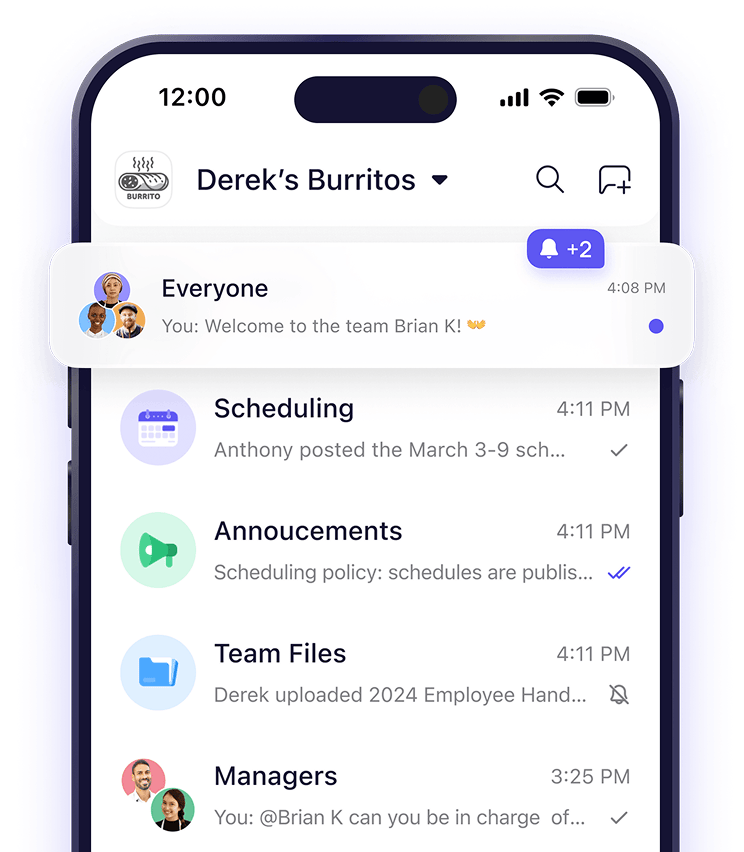
Platforms like Breakroom Chat handle these calculations automatically as part of their shift scheduling features. When you set up pay rules to include shift differentials, the system applies them correctly every time. Managers get labor cost visibility that includes premiums. Employees see their total expected earnings including differentials right in their schedule.
Start Solving Your Coverage Problems Today
Shift differentials solve coverage problems when structured correctly. They transform your hardest-to-fill shifts from scheduling nightmares into opportunities your team wants. The key is paying enough to matter, applying policies consistently, communicating clearly, and using tools that automate the complexity.
Start by identifying your biggest coverage gap. Survey your team about what premium would make that shift acceptable. Test a pilot program for 60-90 days. Measure whether coverage improves and what it actually costs. Expand from there.