
Communication failures in healthcare don't just frustrate staff. According to The Joint Commission, communication breakdowns are implicated in over 70% of sentinel events. A CRICO Strategies investigation of 23,000 medical malpractice lawsuits found that communication failures resulted in $1.7 billion in malpractice costs and nearly 2,000 preventable deaths.
For healthcare department managers dealing with rotating shifts, high turnover, and 24/7 operations, these statistics represent daily operational reality. When a nursing assistant doesn't get critical handoff information during shift change, when scheduled updates never reach overnight staff, or when last-minute callouts create coverage chaos, the consequences extend far beyond inconvenience.
The 2025 NSI National Healthcare Retention Report shows hospital turnover at 18.3%, with RN turnover at 16.4%. Each nurse who leaves costs an average of $61,110 to replace. In departments where communication breakdowns contribute to burnout and dissatisfaction, these turnover numbers climb higher. Meanwhile, the staff who remain carry heavier workloads, face more scheduling conflicts, and struggle to maintain continuity of care.
The gap between what healthcare departments need from communication systems and what they're actually getting creates measurable harm. Managers spend hours manually coordinating schedules through text chains and phone calls. Important updates get buried in group chats. Staff working night shifts miss critical policy changes announced during day meetings. Handoffs between departments fail because information doesn't transfer cleanly.
These communication failures aren’t limited to technology problems or training deficits. They represent system design problems that require structured solutions.
Why standard communication methods fail shift-based departments
Healthcare operates across multiple shifts, locations, and specialties simultaneously. An emergency department runs 24/7 with rotating staff who may never overlap. Surgical teams coordinate across pre-op, OR, recovery, and floor units. Long-term care facilities manage three distinct shifts per day, each with different staffing levels and patient needs.
Traditional office communication tools weren't designed for this reality. Email works for people who sit at desks and check messages throughout the day. It fails completely for CNAs doing patient rounds, surgical techs between procedures, or EMTs responding to calls. Intranet portals require computer access that most clinical staff don't have during shifts. Department bulletin boards only work if staff physically pass by them.
Research from The Joint Commission found that 67% of communication errors occur specifically during handoffs when patient care responsibility transitions between providers. These failures happen because handoff communication relies on verbal exchanges without standardized formats, documentation that lives in multiple disconnected systems, and time pressure that forces rushed transitions.
The night shift problem compounds these challenges. Staff working overnight often have no overlap with day leadership. Policy changes announced during morning huddles never reach them. Training sessions scheduled during business hours exclude them entirely. When they need to communicate urgent issues upward, they're left sending texts or waiting until someone checks their email the next morning.
Group text chains create their own problems. They mix personal and work communication on staff phones. They lack any organizational structure, making it impossible to find specific information later. They don't provide read receipts or acknowledgment tracking. They exclude staff who don't have personal cell numbers in the group. And they create compliance nightmares when sensitive patient information gets shared insecurely.
These differences between ineffective and effective communication aren't theoretical. They represent the gap between departments that lose staff to burnout and communication chaos versus departments that retain experienced teams and maintain patient safety.
Manual scheduling via spreadsheets and printed copies adds another layer of communication breakdown. Changes made to the master schedule don't automatically notify affected staff. When someone needs shift coverage, managers resort to calling or texting each potential replacement individually. Updated schedules posted at the department desk don't reach staff who aren't on-site. This creates no-shows, coverage gaps, and frustrated staff who thought they had the day off.
What effective department communication actually requires
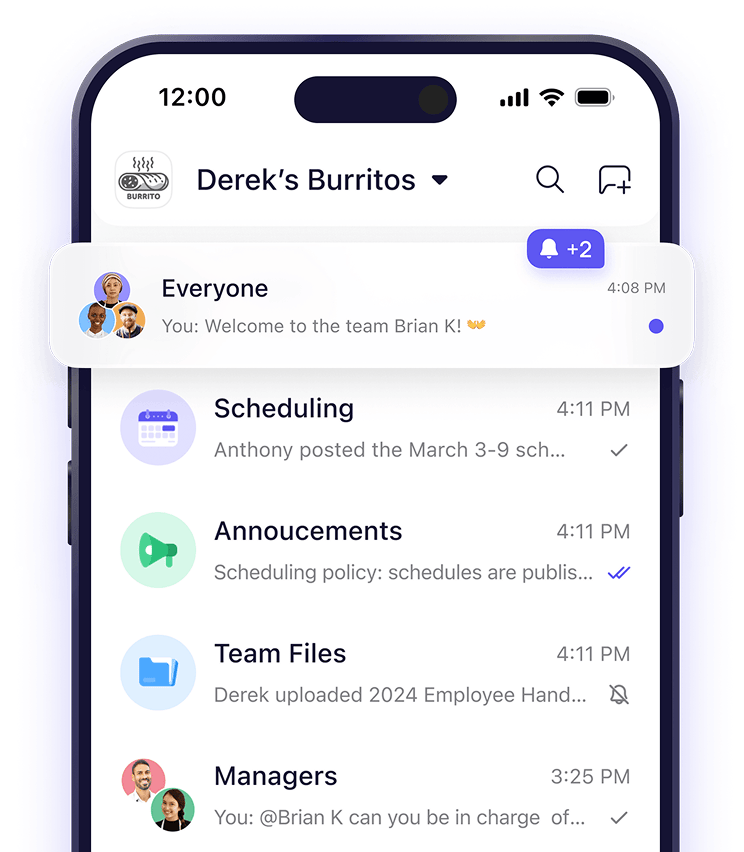
Healthcare departments need communication systems that work within their operational reality, not against it. That means mobile-first access for staff who spend shifts on their feet. Instant notifications for time-sensitive information. Organized channels that separate urgent clinical updates from schedule changes and general announcements. Read receipts and acknowledgment tracking for critical messages. And secure, HIPAA-compliant platforms that don't expose patient information.
Standardized shift handoff protocols reduce errors and improve patient safety. A study published in The Joint Commission Journal on Quality and Patient Safety showed that implementing the I-PASS handoff tool at MD Anderson Cancer Center increased handoff adherence from 41.6% to 70.5% over three years, while safety culture scores rose from 38% to 59%.
The I-PASS framework structures handoffs around five components: illness severity, patient summary, action list, situational awareness and contingency planning, and synthesis by receiver. When built into electronic health records and supported by communication tools that ensure the right people receive the right information, this standardized approach prevents the ad hoc verbal exchanges that lead to missed details and errors.
Real-time schedule access matters for both managers and staff. When everyone can view current schedules from their phones, check time-off requests status, and see who's covering which shifts, it eliminates the constant "when am I working?" questions that consume manager time. Staff can plan their lives around reliable schedule information instead of checking printed copies that may already be outdated.
Direct messaging between specific staff members or departments prevents communication from getting lost in group chaos. An OR scheduler needs to coordinate with specific surgical nurses, not broadcast to the entire department. A charge nurse needs to relay patient transfer information to the receiving unit, not hope the right people see a general announcement. These targeted communications happen faster and more reliably when the system supports them.
Department-specific channels organize information by relevance. Clinical updates go to clinical staff. Schedule changes go to affected team members. Administrative announcements go to everyone. Training materials go to new hires and their preceptors. This structure prevents important information from getting buried in irrelevant messages while ensuring people actually see what matters to them.
Acknowledgment and read receipt tracking provides accountability for critical communications. When a manager sends an updated infection control protocol, they need to know who has read it and who hasn't. When overnight staff report a safety concern, leadership needs confirmation the message was received and understood. Manual follow-up to verify message receipt wastes time that automated tracking eliminates.
Practical implementation for small and mid-size departments
Large health systems with dedicated IT departments and budget for enterprise software can deploy comprehensive communication platforms across entire organizations. Small hospitals, standalone clinics, urgent care centers, and specialized departments within larger systems face different constraints. They need solutions that work without extensive IT support, fit limited budgets, and deliver immediate value without months of implementation time.
Start with the most critical communication breakdown in your department. If shift handoffs cause the most problems, focus there first. If schedule-related communication creates daily chaos, prioritize that. Trying to solve everything at once leads to incomplete implementation and staff resistance. Pick one high-impact problem and solve it thoroughly.
Get frontline staff input before selecting any system. The people who will use communication tools daily know what works and what doesn't. They understand the difference between theoretical features and practical utility. They can identify workflow conflicts that management might miss. And they're far more likely to actually use a system they helped choose.
Small-scale pilots prove value before department-wide rollout. Select one shift, one unit, or one team to test new communication approaches. Gather feedback. Identify friction points. Make adjustments. Then expand to the rest of the department with a proven system and real examples of improvement.
Champion selection matters more than most managers realize. Some staff adapt quickly to new systems while others resist change. Find the natural communicators on your team who others already look to for information. Make them early adopters who can demonstrate benefits and help colleagues through the learning curve.
Training needs to meet staff where they are. Not everyone has the same comfort level with mobile apps or new technology. Some will need hands-on walkthrough sessions. Others will learn from quick reference guides. Provide multiple training formats and make support easily accessible during the first few weeks of adoption.
Integration with existing scheduling systems prevents duplication of work. If your department already uses specific scheduling software, communication tools should connect with it rather than requiring separate schedule management. Staff shouldn't have to check multiple platforms to know when they work and what's happening in their department.
Measure specific outcomes that matter to your department. Don't just track adoption rates and system usage. Look at schedule-related questions managers receive before and after implementation. Monitor time spent coordinating shift coverage. Track staff awareness of policy updates through quick surveys. Measure handoff error rates if you're addressing that problem. Quantifiable improvements justify continued investment and expansion.
Cost structures should match healthcare department realities. Per-employee pricing creates budget pressure when you're trying to reduce turnover but still need to hire replacements. Departments with seasonal census variations face unpredictable costs. Look for flat-rate pricing by location or department that eliminates these variables.
Building communication practices that actually stick
Technology enables better communication, but systems and culture determine whether improvements last. Departments that successfully improve communication do more than implement new tools. They build sustainable practices that become standard operating procedure.
Establish clear communication protocols for different message types. Time-sensitive clinical information follows one path with specific escalation steps. Schedule changes follow another path with required advance notice. General updates use a third channel. When staff know exactly where information lives and how to access it, they stop missing critical messages.
Regular communication audits identify gaps before they create problems. Once per quarter, have someone shadow a shift from each rotation. Do overnight staff receive the same information as day staff? Do part-timers or per-diem staff know about policy changes? Are handoffs actually following established protocols? The answers reveal where your communication system has weak points.
Recognition for strong communication reinforces the behavior you want. When someone consistently provides excellent shift handoffs, acknowledge it publicly. When a team successfully manages a complex schedule change without chaos, celebrate that win. Staff repeat behaviors that get noticed and appreciated.
Clear accountability for communication failures prevents recurring problems. If important information doesn't reach the right people, there needs to be a structured process for understanding what broke down and fixing it. This isn't about blame. It's about identifying system failures and addressing them systematically.
Leadership consistency matters enormously. If managers say communication is a priority but then skip team huddles, don't respond to staff messages promptly, or make schedule changes without proper notice, staff learn that stated priorities don't match reality. Leaders have to model the communication practices they expect from their teams.
Feedback loops close the communication circle. Don't just push information out and hope people receive it. Create mechanisms for staff to confirm understanding, ask questions, and flag problems. When leadership actually responds to that feedback and makes adjustments, it builds trust that makes future communication easier.
Protection of time for communication activities prevents them from getting deprioritized. Protect 15 minutes of overlap between shifts to make handoffs easier. Schedule team huddles consistently to provide more value. Block time to specifically respond to staff messages. Communication shouldn’t be an afterthought.
What departments that solve this look like
Departments with effective communication systems operate differently in observable ways. The table below shows the specific improvements managers report after implementing structured communication practices:
These improvements compound over time. When managers spend less time on administrative coordination, they can focus on the leadership work that prevents problems rather than constantly reacting to communication breakdowns. When staff aren't frustrated by constant schedule confusion, they stay longer and perform better. When patient safety improves, the department's entire operation becomes more stable.
Starting tomorrow
You don't need perfect solutions or unlimited budget to improve department communication. You need a clear understanding of your biggest communication breakdown and willingness to try a structured approach to solving it.
Pick one shift and ask them what communication problems waste the most time or create the most frustration. Listen to their specific examples. Then test one concrete solution with that shift for two weeks. Measure whether it actually helps. Adjust based on feedback. Expand if it works.
The goal isn't eliminating all communication problems overnight. The goal is making measurable improvement on the specific issue that causes the most harm. In healthcare departments where communication failures contribute to patient safety risks, staff turnover, and daily operational chaos, that improvement matters.