
Your 250-person wedding reception launches in two hours. Setup is running 30 minutes behind. Three servers just arrived who've never worked your events before. The bride's family added 15 last-minute guests. Your lead bartender is stuck in traffic. The kitchen staff is asking whether the vegetarian count changed.
This is reality. Planning creates the foundation, but execution determines whether guests remember excellent service or visible chaos. The operations that handle these moments well don't prevent all problems. They respond faster, communicate better, and have systems that prevent small issues from cascading into failures guests notice.
The pre-event briefing that makes everything else work
Gather every staff member 30-45 minutes before service starts for a comprehensive briefing. This isn't optional for large events. It's the difference between coordinated service and individuals improvising independently.
Cover the event structure and timing. Walk through the entire sequence: cocktail hour starts at 5pm, dinner service begins at 6:30pm, toasts at 7:45pm, cake cutting at 8:30pm, dancing until 11pm. Every role needs to understand how their work fits the overall timeline.
Introduce the command structure. Who's the overall event lead? Who manages the front-of-house? Who runs the kitchen? Who handles bar service? Every staff member should know their direct supervisor and the escalation chain for problems.
Review specific guest needs and restrictions. Table 8 has two severe nut allergies. The couple in the corner booth is celebrating their 50th anniversary. VIP tables get priority service. These aren't minor details. They're the specifics that determine whether service feels attentive or generic.
Assign specific zones and responsibilities. Break the venue into service areas. Servers 1-4 handle tables 1-10. Servers 5-8 cover 11-20. Crystal-clear assignments prevent gaps and overlaps that frustrate both staff and guests.
Walk through the contingency scenarios. "If we run out of the salmon entree, here's what happens." "If a guest has a medical emergency, here's who calls 911 and who manages the scene." Problems handled smoothly during events were rehearsed beforehand.
Communication systems that work under pressure
The chaos of live service destroys communication systems that depend on everyone staying calm and remembering protocols. You need tools and structures that function when people are stressed, moving fast, and handling multiple demands.
Establish communication channels for different functions. Kitchen-to-service channel for food readiness and special requests. Service lead channel for urgent issues requiring management intervention. Setup/breakdown channel for logistics. All-hands channel for emergency communications only. Segregating traffic by function prevents important messages from drowning in noise.
Use visual signals for timing coordination. A designated person manages overall event timing and signals transitions. Green light means on schedule. Yellow means we're running five minutes behind. Red means we're significantly delayed and need to adjust.
Create physical rally points for team check-ins. Service staff know to check in at the service station every 20 minutes. Kitchen staff get updates at the expo line. Regular touchpoints keep everyone aligned without constant communication interrupting service.
Define the escalation path for problems. Minor issues (guest wants extra napkins) = server handles it. Medium issues (guest complains about food temperature) = service captain intervenes. Major issues (guest illness, equipment failure) = event lead gets involved immediately.
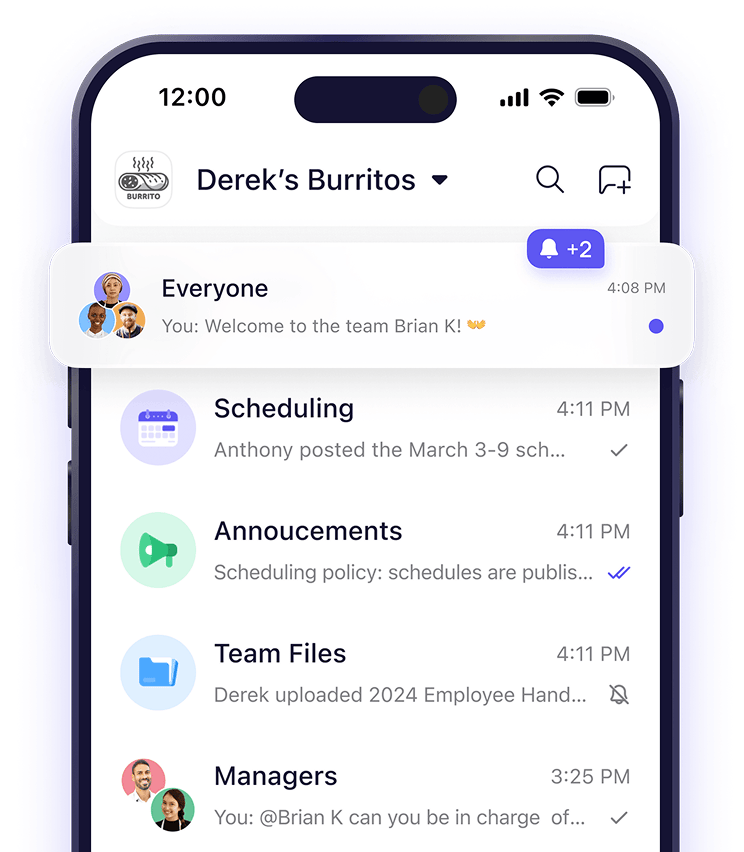
Technology tools like scheduling apps with messaging features centralize communication better than scattered text chains. Two-way radios might work for urgent messages on site. Whatever system you use, test it during training and verify everyone has access before service starts.
Managing the staffing crisis that happens mid-event
Despite perfect planning, staff emergencies happen during events. Two hours before service, a server calls in sick. Thirty minutes into cocktail hour, a bartender cuts their hand. An hour into dinner service, the lead busser walks out mid-shift.
Activate your float pool immediately. The on-call server gets the emergency call with clear instructions: arrive at this address, park here, report to this person, you're covering these tables. Speed matters more than perfection.
Redistribute work among existing staff if backup isn't immediately available. A 10-table section split between two servers becomes 5 tables each, with a third server now covering both their original section plus overflow. Service quality drops slightly but remains functional.
Adjust service style to match available staff. If you're short on servers for plated service, shift to modified French service where dishes are brought to tables but guests serve themselves from platters. Not ideal, but prevents total service collapse.
Communicate changes to the client immediately but solution-focused. "We had a staffing issue but here's what we're doing to maintain service quality" beats "we're short staff and I don't know what's happening."
Cross-trained staff provide instant flexibility. The server who also knows bar basics can jump behind the bar for 30 minutes during a rush.
Quality control that prevents problems before guests notice
Service captains need to constantly scan for issues developing. Are tables being cleared promptly? Is the buffet fully stocked? Are water glasses being refilled? Proactive attention catches problems when they're small.
Temperature checks on food are non-negotiable. Sample plates from each batch leaving the kitchen. Verify hot food is served hot (above 135°F) and cold food stays cold (below 41°F). Food safety violations shut down operations.
Visual presentation standards need real-time enforcement. A plate leaves the kitchen with sauce smeared on the rim? It goes back. A buffet chafing dish is only one-quarter full? Refill it now, not when it's empty.
Timing coordination between courses requires active management. The kitchen needs signal from service staff that guests are finishing appetizers before plating main courses. This coordination prevents awkward gaps or food sitting under heat lamps too long.
Monitor guest flow and adjust staffing in real-time. Cocktail hour sees heavier traffic than expected? Pull a server from dinner setup to pass more appetizers. Bar line getting too long? Open a secondary station or add a bartender.
Address visible problems immediately. A spilled drink, dropped fork, or minor guest complaint shouldn't wait for "a good time" to handle. Speed of response signals that your operation is on top of things.
The service recovery that turns problems into wins
Guest complaints during events require specific protocols that balance speed, empathy, and solution delivery.
Acknowledge the problem without making excuses. "I understand your steak wasn't cooked as requested" beats "well, the kitchen is really busy tonight." Guests don't care about your operational challenges.
Empower service staff to make immediate corrections within defined limits. Servers can offer replacement dishes, complimentary drinks, or menu substitutions without seeking management approval.
Escalate promptly when front-line resolution fails. If a guest remains unsatisfied after the server's intervention, the service captain appears within two minutes. The time gap between complaint and management response determines whether situations escalate or resolve.
Document significant issues during the event. Note which table, what the complaint was, and how you resolved it.
Follow up before the event ends. If you replaced someone's dinner, check back during dessert: "I wanted to make sure your entree met expectations this time."
Bar service management that prevents bottlenecks
Bar lines kill guest satisfaction faster than almost any other service failure. Guests will forgive slightly slow food service. They won't forgive standing 15 minutes for a drink.
At Elton John's Oscar party, which hosts 1,000 guests and raises over $8 million annually, bar service runs flawlessly because every detail is planned months in advance. Multiple stations, strategic placement, and adequate staffing prevent the bottlenecks that plague lesser events.
Monitor line length constantly. More than three people waiting indicates you need to adjust something. Either add a bartender, open a second station, or simplify the drink menu temporarily.
Batch-prep popular drinks during slower periods. Pre-pour wine into groups of glasses. Batch-mix popular cocktails. Pre-cut fruit garnishes. These preparations eliminate work during peak periods.
Use runners or barbacks to pre-bus glassware from tables. Empty glassware accumulating at the bar slows service while bartenders wash or run out of clean glasses.
Strategic drink menu design prevents bottlenecks. Limiting cocktails to 4-6 options that share common ingredients speeds preparation. Complex drinks requiring multiple steps and rare ingredients create congestion.
Communicate last call timing clearly. Guests who know the bar closes in 15 minutes make different ordering decisions than those who think they have unlimited time.
Kitchen coordination that maintains quality and timing
Kitchen-to-service communication determines whether meals arrive properly timed and temperature.
Use ticket systems even for preset menus. Each course gets a ticket showing table numbers, special dietary needs, and timing. This prevents the kitchen from plating table 5's entrees while table 5 still has appetizers on the table.
Stagger course releases by section. Don't try to serve all 250 guests simultaneously. Release tables 1-10 first, then 11-20, rolling through the room in waves.
Maintain par levels for all menu items. Running out of an entree choice mid-service creates problems you can't easily solve. Building buffer quantities (10-15% over confirmed counts) prevents shortfalls.
Temperature holding requires active management. Break out your favorite infrared and probe thermometers! Food held improperly loses quality in minutes. Hot boxes maintain temperature for plated items. Chafing dishes get monitored for water levels and fuel supply.
Special dietary requirements get systematic handling. Designate a specific person who tracks all allergy and dietary restriction plates from prep through service. Color-coded plates or ticket markers identify these orders visually.
The breakdown that proves professionalism
Events don't end when guests leave. Breakdown reveals operational discipline as clearly as service does.
Assign clear breakdown responsibilities during the pre-event briefing. Each staff member knows their specific tasks. Servers handle table linens and place settings. Bussers manage glassware and china. Kitchen staff breaks down food stations. Nobody should wonder what they're supposed to do once service ends.
Execute breakdown in phases matching staff departure times. Early-release staff handles time-sensitive tasks: clearing perishables, consolidating leftovers, securing valuable equipment. Later-release staff handles bulk breakdown: chairs, tables, decor removal.
Conduct equipment inventories before leaving the venue. Count chafing dishes, serving utensils, linens, glassware against your original inventory list. Discovering missing items the next day when returning rentals costs money.
Document any venue damage or issues immediately. Spilled wine on carpet, broken glass, and damaged walls should be noted and photographed before staff leaves.
Secure proper food handling for leftovers. Proper storage, temperature control, and transport prevent food safety issues.
Leave the venue cleaner than you found it. Venue managers remember catering operations that leave messes requiring additional cleaning costs.
The post-event debrief that improves future operations
Gather key personnel within 24-48 hours for a structured event review. Waiting longer means memories fade and lessons get lost.
Start with what worked well. Positive reinforcement matters. Identify specific actions or decisions that contributed to success.
Address problems systematically, not emotionally. "We ran out of vegetarian entrees" is a problem to solve. "The kitchen screwed up" is unhelpful. Focus on process failures, not personal failures.
Review timeline adherence and deviations. If you ran 15 minutes late on the salad course, why? Understanding causes allows corrections.
Analyze staffing accuracy. Did you have too many people? Too few? This data refines future planning.
Document client feedback before memory fades. What did they say at the end of the night? What feedback did they provide formally?
Create action items with owners and deadlines. "Update training to include proper plate clearing technique" with a responsible person and completion date.
Track recurring problems across multiple events. If the same issue appears repeatedly, it's a systemic problem requiring structural fixes.
Building staff retention for long-term success
Quality temporary staff who work multiple events become operational assets worth retaining.
Provide clear schedule visibility far in advance. Staff who can plan their lives around your events are more likely to prioritize your shifts.
Pay competitive rates and on time. Delayed payroll or below-market rates guarantee high turnover.
Recognize excellent performance publicly and specifically. "Great job tonight" is nice. "Your attention during setup prevented the linen shortage from causing problems" is meaningful recognition.
Build career development paths for interested temporaries. Some temps want permanent roles. Others want more responsibility. Creating opportunities to grow within your operation builds loyalty.
Communicate professionally and respectfully. Operations that treat temps like valued team members rather than disposable labor attract better people and better retention.
What separates smooth execution from visible chaos
The difference between operations that handle large events effortlessly and those that visibly struggle comes down to preparation meeting adaptability.
Plans provide structure but can't predict everything. The operation that executes well combines thorough preparation with real-time flexibility.
Communication systems that function under pressure keep teams synchronized. The operations that fall apart during problems often have communication breakdowns as the root cause.
Clear command structures prevent decision paralysis. Everyone knows who handles what level of problem. Front-line staff solve simple issues immediately. Mid-level problems escalate to service captains. Critical problems reach event leadership instantly.
Quality control throughout service catches problems when they're fixable. Temperature checks, visual inspections, and timing coordination are the difference between maintaining standards and delivering subpar service.
Professional breakdown and follow-up separate operations that get rehired from those who don't. The venue staff who sees your team efficiently break down and leave the space clean will recommend you for future events.
Large-event catering execution tests operational maturity. Anyone can serve 20 people from a small kitchen. Coordinating 30 staff members to serve 300 guests with precision timing, consistent quality, and professional grace requires systems, communication, and practiced execution that only comes from treating planning and coordination as core competencies.
The operations that thrive in this space understand something fundamental: guests don't always remember individual menu items or decor details. They do remember how service felt. Smooth, attentive, professional service comes from staffing decisions made weeks before the event and coordination systems executed flawlessly during service. Get those right and everything else becomes easier.