Why Structure Matters More Than You Think
A clear reporting structure eliminates confusion about decision-making authority and accountability. When employees know exactly who their supervisor is and who that supervisor reports to, they understand the chain of command for questions, concerns, and approvals. This clarity becomes particularly important as businesses grow beyond a handful of employees where everyone knows everyone else. Without formal structure, conflicts arise over who makes decisions, who holds people accountable, and who employees should approach with different types of issues.
The Classic Hierarchy
Common reporting structures include hierarchical models with clear levels from frontline workers through supervisors, managers, and executives. Most small to mid-sized businesses use this traditional approach because it's straightforward and easy to understand. An employee reports to a shift supervisor, who reports to a store manager, who reports to a district manager, who reports to a regional vice president, and so on. Each level has defined responsibilities and authority, creating clear paths for decisions and escalations.
The Matrix Challenge for Frontline Businesses
For frontline businesses, reporting structures often split between operational and functional lines. A restaurant server might report to a shift supervisor for daily operations but also interact with a training coordinator for skill development or an events manager for catering assignments. This dotted-line reporting requires clear communication about which leader handles what types of decisions. The shift supervisor manages daily performance and schedules, while the training coordinator addresses skill development without stepping on the operational supervisor's authority.
Finding the Right Span of Control
The span of control, meaning how many direct reports each manager oversees, varies by industry and job complexity. Research from the Harvard Business Review cited in MIT Sloan research suggests that the optimal span ranges from five to nine direct reports for most management roles, though this depends heavily on context. Frontline supervisors in manufacturing or food service might effectively manage larger teams doing similar tasks, perhaps 10-15 people on a shift. Conversely, managers of specialized roles or complex work typically handle fewer reports requiring more individual attention and guidance.
The Flat vs. Tall Debate
Flat organizational structures with fewer layers have gained popularity, particularly among newer companies influenced by tech industry practices. These models push decision-making authority lower in the organization and reduce bureaucracy that can slow responsiveness. However, very flat structures can create problems. When managers have 20+ direct reports, they lack time for meaningful one-on-one relationships or development conversations. Employees may struggle to get attention for important issues. Very flat structures also limit advancement opportunities since fewer layers mean fewer promotion possibilities.
Multi-Location Complexity
Multi-location businesses face additional complexity that single-site operations avoid. Should store managers report to regional managers or to functional leaders like an operations director? Should marketing teams at individual locations have dotted-line relationships to corporate marketing? These matrix reporting relationships can improve coordination and expertise sharing but also create confusion about priorities when different leaders give conflicting direction. An employee with two bosses needs to know who gets priority when they disagree.
Documenting for Clarity
Documenting the employee management structure helps everyone understand relationships and expectations clearly. An organizational chart provides visual reference, showing the hierarchy at a glance. But charts should be supplemented with written descriptions of each role's responsibilities, decision-making authority, and scope. New employees particularly benefit from seeing where they fit in the broader organization. Understanding that their assistant manager reports to a general manager who reports to an area director provides context for how the business operates beyond their immediate team.
Managing Change Thoughtfully
Changes to reporting structures should be communicated clearly and thoughtfully with attention to emotional impact. When businesses reorganize, employees whose reporting relationships change may feel uncertain about their status, confused about new expectations, or worried about their future. Leaders should explain the rationale behind structural changes, how they benefit the organization and individual employees, what changes practically for each person, and when changes take effect. Transparency reduces anxiety and speculation during organizational transitions.
Communication Flow: Up, Down, and Sideways
Reporting structures also impact communication flow both up and down the hierarchy. Information needs to travel efficiently in both directions. Managers must communicate leadership decisions to their teams clearly and promptly. They must also convey frontline concerns and feedback to senior leaders accurately. When reporting lines are unclear or communication breaks down, employees become disconnected from organizational priorities and leadership remains ignorant of operational realities.
Technology as an Enabler
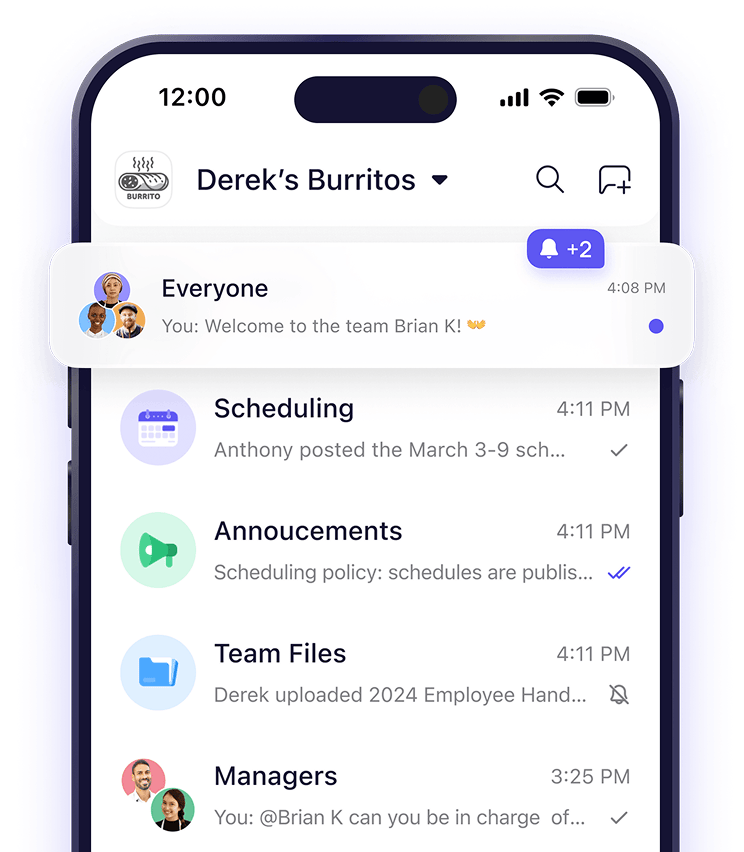
Technology platforms can reinforce reporting structures by building them into operational systems. Workforce management tools might route time-off requests to the appropriate supervisor automatically, ensure the right manager approves schedule changes, send alerts about issues to the person responsible for addressing them, and generate reports showing each manager's team and metrics. Platforms like Breakroom allow businesses to set up organizational structures that reflect their actual reporting relationships, making abstract org charts functional in daily operations.
The Informal Network
Informal influence networks often exist alongside formal reporting structures, and wise leaders recognize both. A long-tenured employee might have significant influence despite having no direct reports because people trust their judgment and seek their advice. A charismatic manager might effectively lead people outside their direct chain of command through personal relationships and respect. Acknowledging these informal structures while maintaining clear formal accountability helps organizations function effectively. The formal structure provides accountability and clear decision rights, while informal structures enable collaboration and problem-solving beyond rigid hierarchies.
When Normal Channels Fail
The reporting structure should also clarify escalation paths for problems, providing safety valves when normal channels fail. Employees need to know what to do when their direct supervisor is unavailable for an urgent decision, unhelpful or unresponsive to legitimate concerns, or is actually the source of the problem. Having clear escalation procedures protects employees and helps resolve issues before they grow into larger conflicts, legal problems, or crises. An employee dealing with supervisor harassment needs to know they can escalate to the next level without fear of retaliation.
The Shift Work Factor
Span of control in shift-based businesses deserves special attention since supervisors manage teams whose members work different hours. A store manager might have 15 employees on the org chart but only sees 5-6 at a time due to varying shifts. This impacts how supervision actually works compared to office environments where teams work simultaneously. Shift supervisors who are present during operations provide day-to-day oversight, while the store manager provides overall direction and coordination across all shifts.
Role Clarity Prevents Conflict
Role clarity within reporting structures prevents duplication and gaps in responsibility. When multiple managers work in a location, clear delineation of authority avoids conflicts. The kitchen manager handles food preparation and safety, while the front-of-house manager handles service and customer experience. Both report to the general manager who ensures coordination. Without these clear boundaries, confusion and conflict arise over who makes decisions about cross-functional issues.
Scaling for Growth
Reporting structures should enable scalability as businesses grow. A structure that works with two locations may not scale to twenty. As organizations expand, they typically add layers between frontline workers and senior executives. A company with three stores might have store managers reporting directly to the owner. With 15 stores, it needs regional managers between store managers and executives. With 50 stores, it might need district managers between store and regional levels. Each layer should add clear value rather than just creating bureaucracy.
Culture Through Structure
The organizational structure impacts culture and values in practice. Highly hierarchical structures with many layers can create disconnection between frontline workers and senior leadership. Very flat structures can create confusion and overwhelm managers. The best structures balance clear authority with accessible leadership, enabling employees to understand their place while feeling connected to organizational direction.