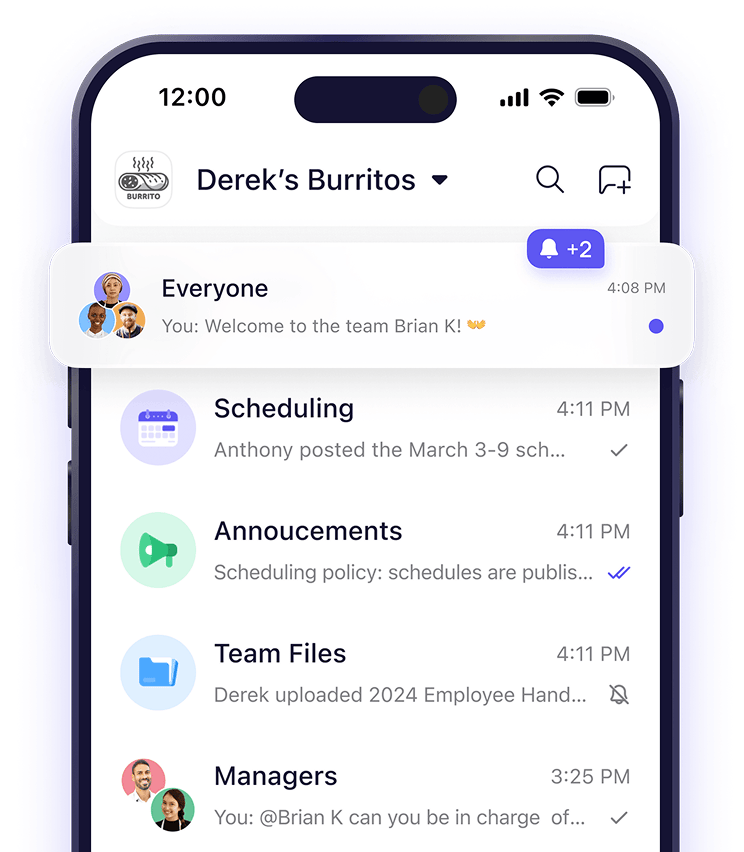
You're trying to prep for dinner rush and three different employees interrupt to ask the same questions: "Can I see my pay stub?" "How many PTO hours do I have?" "I need to change my direct deposit." Each request takes five minutes because you need to log into the payroll system, find the information, and either print it or email it. That's 15 minutes you don't have, answering questions employees could answer themselves.
Employee self-service is technology that allows your workforce to view and update their own HR information, submit requests, and access documents without involving managers or HR staff. Think of it as moving routine HR transactions from "you have to ask someone" to "you can do it yourself from your phone."
The concept is straightforward: instead of employees asking managers to check their schedule or requesting a copy of their W-2, they access a portal or mobile app where that information lives. The manager gets a notification if approval is needed, the change flows into payroll automatically, and nobody spends time playing telephone.
Core Self-Service Capabilities That Matter
Not all self-service features deliver equal value. Focus on the capabilities that eliminate your highest-volume, lowest-value interactions.
Personal information management allows employees to update their own address, phone number, emergency contacts, and direct deposit information. When someone moves, they make the change themselves rather than submitting a form to HR.
Pay stub and tax document access eliminates an enormous volume of requests. Employees can view current and historical pay stubs, download their W-2 at tax time, and access year-end earnings summaries whenever needed. According to Certinal's 2025 research, employees save approximately 300 labor hours per month due to automation and faster workflows enabled by self-service features.
Time-off requests move from paper forms or verbal conversations to digital workflows. The employee submits the request through the portal, the manager receives a notification and approves or denies it, and the decision flows back automatically. The system prevents double-booking and tracks remaining PTO balances.
Schedule visibility has become essential as predictive scheduling laws spread. Employees need to see not just this week's schedule, but schedules as far in advance as you've created them. They need to access schedules from their phones when they're not at work.
Benefits information and enrollment belong in self-service systems because the complexity exceeds what most managers can answer accurately. During open enrollment, employees review their options, compare plans, make elections, and designate beneficiaries through guided workflows.
The Mobile Reality for Deskless Workers
Office workers access self-service systems from their desk computers. Shift workers are often deskless and access systems from personal phones between shifts or during breaks. This difference fundamentally shapes what works.
Mobile-first design isn't optional. The interface must work on a small screen with touch input. Forms must be simple enough to complete on a phone. If your self-service portal requires a desktop computer, it's a hassle for most of your workforce.
Push notifications make self-service systems actually useful. When an employee's time-off request is approved, they get a notification on their phone. When their schedule changes, they get notified. Without notifications, employees don't check the portal regularly enough for it to replace existing communication methods.
Single sign-on removes a major adoption barrier. Employees shouldn't need to remember separate usernames and passwords for five different systems. Each additional authentication step reduces usage.
Use Cases That Drive Real ROI
The business case for employee self-service typically rests on time savings from eliminating routine requests, accuracy improvements from reducing data entry errors, and employee satisfaction from increased autonomy.
Consider a restaurant group with 300 employees across seven locations. Before implementing self-service, managers spent an estimated 20 hours weekly handling routine requests like checking PTO balances, printing pay stubs, looking up shift schedules, or updating contact information. At a loaded labor cost of $35/hour, that's $700 weekly or $36,400 annually spent on tasks that self-service eliminates.
The accuracy angle is harder to quantify but equally valuable. When employees update their own information, they see exactly what's changing and can verify accuracy immediately.
Time-off management demonstrates clear ROI. Before self-service, an employee would ask their manager for time off. The manager would check the schedule, check a spreadsheet to see if the employee had enough PTO, write down the request, and later enter it into wherever records lived. With self-service, the employee submits the request, the system instantly shows PTO balance and schedule conflicts, and the manager just approves or denies with one click.
Benefits enrollment creates annual chaos without self-service. Distributing paper forms to shift workers across multiple locations, collecting completed forms before the deadline, manually entering elections into the benefits system, and tracking down the 30% who didn't submit anything on time consumes weeks. Self-service platforms automate all of this.
What Self-Service Doesn't Replace
Employee self-service handles routine transactions well. It doesn't replace the judgment-based work that actually requires human intervention. Complex accommodation requests under the ADA still need HR expertise. Investigating harassment complaints isn't a self-service workflow. Performance improvement planning requires manager involvement.
The mistake some businesses make is assuming self-service eliminates the need for HR support. What it actually does is eliminate the routine transactional work so HR and managers can focus on complicated situations that genuinely require their expertise.
Self-service also doesn't replace communication. Giving employees access to their schedule through a portal is great, but that doesn't mean you can stop actively notifying them when schedules change. Self-service is a pull mechanism where employees can access information when they need it. You still need push mechanisms for time-sensitive updates.
Implementation Challenges With Hourly Workforces
Getting office workers to adopt self-service is relatively straightforward. Getting hourly shift workers to adopt it is harder.
Many don't have company email addresses, which creates an authentication challenge. Solutions include using personal email (which many businesses resist), using phone numbers for authentication via SMS, or creating a simple employee ID and PIN system.
Technology literacy varies widely. Some employees will adopt self-service immediately. Others will struggle with basic login procedures and request that you just handle things the old way.
Language barriers affect adoption when your workforce speaks multiple languages. Your self-service platform should support the languages your employees actually speak.
Access to devices creates practical constraints. If employees can only access the portal from personal smartphones, you're excluding the subset without smartphones or with limited data plans. Some businesses provide kiosks at worksites where employees can access self-service during breaks.
Training and Change Management
Technology is the easy part. The hard part is getting 200 people who've done things a certain way for years to change their behavior.
Start with managers. They need to understand the system before employees do because they'll be answering questions and troubleshooting issues.
Communicate the "why" to employees. "We're implementing self-service" sounds like you're making them learn new technology. "You'll be able to check your schedule and request time off from your phone anytime, instead of having to ask a manager" sounds like you're making their lives easier.
Provide multiple training methods because people learn differently. Some will watch a quick video. Some will read a one-page guide. Some will need hands-on walkthroughs.
Expect a transition period where you're running parallel processes. During the first few months after launch, employees will still ask managers questions they could answer themselves through the portal. Don't immediately refuse to help—that just creates frustration. Help them this time while showing them how to find the same information next time.
Making Self-Service Work for Your Business
Start by identifying your three highest-volume, lowest-value employee requests. Implement self-service for those before expanding to other features.
Choose a platform designed for deskless workers. Many self-service systems were built for office environments and grafted onto hourly workforce use cases later. Look for solutions that prioritize mobile experience, use simple authentication methods, and understand the workflow realities of shift-based businesses.
Set realistic expectations about the adoption timeline. Office workers might adopt new software in a week. Hourly workers spread across multiple shifts and locations might take three months to reach 80% adoption. Plan accordingly and don't declare the project failed if everyone isn't using it immediately.
For businesses managing hourly workers across multiple locations, employee self-service isn't just about efficiency. It's about giving your team autonomy to manage their own information, access to data they need when they need it, and reducing friction in basic workplace transactions. When a server can swap shifts with a coworker through a few taps on her phone instead of tracking down a manager and filling out a form, that's a better experience. Make enough small improvements like this and they compound into meaningfully better employee experience.