You've just hired a new VP of Operations to oversee your 15-location restaurant group. She starts Monday. Your standard onboarding checklist sits in front of you: complete I-9 form, review employee handbook, assign onboarding buddy, schedule orientation. Something feels off. This isn't going to work.
Executive onboarding operates in a completely different universe than standard employee onboarding. The stakes are higher, the timeline is compressed, and the focus shifts from task completion to strategic integration. Your new executive needs to understand company culture, build critical relationships, and start making high-level decisions within weeks, not months. The cost of getting this wrong is staggering. According to research from the Corporate Executive Board, executives who go through structured onboarding are 69% more likely to remain with the company after three years.
The financial impact of executive turnover hits particularly hard in multi-location operations. Harvard Business Review reports that replacing a senior executive costs an average of 213% of their annual salary when you factor in recruitment, lost productivity, and strategic disruption. For a VP earning $150,000, that's nearly $320,000 down the drain if they leave within the first year.
What Makes Executive Onboarding Different
Standard onboarding focuses on role-specific training and operational integration. Executive onboarding centers on three fundamentally different objectives: strategic alignment, relationship building, and cultural assimilation at the leadership level.
Your new Regional Manager needs to understand your business strategy, not just how to approve time-off requests. She needs to meet with every location manager within her first 30 days. She needs to grasp the informal power structures, not just read the organizational chart.
Time compression creates another critical difference. While hourly employees might have 90 days to prove themselves, executives face immediate pressure to demonstrate strategic thinking and leadership. Your new Director of HR will attend her first leadership meeting in week two. She'll be expected to contribute, not just observe. She needs context fast.
The Strategic Pre-Boarding Phase
Effective executive onboarding starts before the start date. Before then, send your new executive your strategic plan, recent financial reports, organizational charts with photos and brief bios, and a list of key projects currently underway. This isn't about overwhelming them with paperwork. It's about giving them homework so they arrive ready to engage.
Schedule pre-start calls with key stakeholders. Your new COO should speak with your biggest vendor, your landlord, maybe even your banker before day one. These conversations build relationships early and provide valuable context. They also signal to your organization that this person is already part of the leadership team.
Create a 30-60-90 day plan together before they start. This collaborative approach ensures alignment on priorities and expectations. Your new VP of Operations should know exactly what success looks like at each milestone.
First Week: Strategic Immersion
Forget the orientation room. Your executive's first week should involve strategic immersion, not administrative processing. Yes, they need to complete payroll paperwork and benefits enrollment, but those tasks shouldn't dominate their calendar.
Schedule one-on-one meetings with every member of the leadership team. These aren't courtesy calls. They're intelligence-gathering sessions. Your new CFO needs to understand how each department operates, what challenges they face, and how they interact with finance. Allocate 60-90 minutes per meeting.
Arrange site visits to key locations if you operate multiple sites. Your new VP of Operations can't develop strategy from a desk. She needs to see your busiest restaurant during the dinner rush, your highest-performing retail location on a Saturday, your newest healthcare facility during a shift change. She needs to meet frontline managers and hear their concerns directly.
Include informal team integration time. The leadership team needs to see your new executive as a person, not just a title. A team lunch or after-work gathering creates space for natural relationship building without the pressure of formal meetings.
Month One: Building Your Strategic Network
Your executive's first 30 days should focus on relationship mapping and strategic learning. This goes far beyond the standard onboarding checklist approach.
Create a stakeholder map that identifies every critical relationship your executive needs to build, both internal and external. Your new Director of Operations needs relationships with location managers, your insurance broker, your primary vendors, your legal counsel, and key customers. Map these relationships by priority and schedule face time with each one.
Assign a peer mentor, not an onboarding buddy. The buddy system works great for hourly employees who need operational guidance. Executives need a trusted peer who can explain the unwritten rules, decode organizational politics, and provide confidential advice. This should be someone at the same level who has been with the company for at least two years.
Schedule reverse onboarding sessions where your new executive presents their observations and initial recommendations to the leadership team. This accomplishes multiple objectives: it validates their learning, it gives them a platform to establish credibility, and it provides valuable outside perspective on your operations.
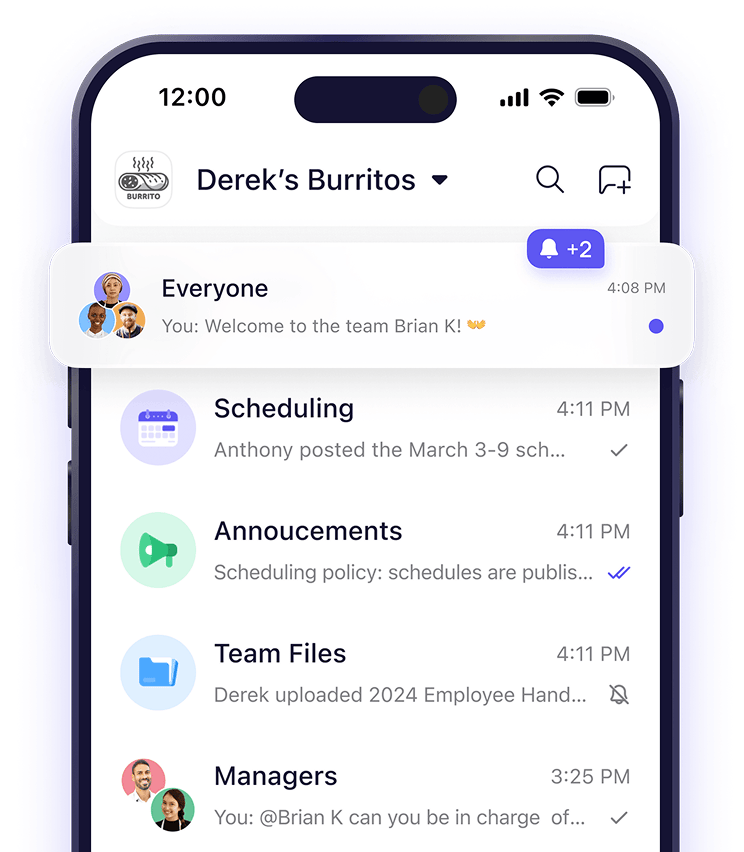
Communication tools play a critical role in executive integration across multi-location operations. Making sure your new executive can easily connect with location managers, frontline staff, and leadership helps them build relationships faster without requiring constant travel.
Months Two and Three: Strategic Contribution
By month two, your executive should transition from learning to contributing. This doesn't mean they stop learning, but the balance shifts toward active participation in strategy and decision-making.
Assign ownership of a strategic initiative. This should be something meaningful but not mission-critical, something that allows your new VP to demonstrate capability while building cross-functional relationships. Maybe it's rolling out a new scheduling system, revamping your hiring process, or improving food cost controls across locations.
Schedule regular check-ins with the CEO or business owner. These shouldn't be status meetings. They should be strategic conversations about what your executive is learning, what concerns they're seeing, and how they're thinking about their role. Allocate 60 minutes every two weeks.
Include them in annual planning if the timing aligns. Your new executive needs to understand how strategic decisions get made at your company. Even if they joined in August and annual planning happens in October, include them in the process as an observer if nothing else.
Measuring Executive Onboarding Success
Track relationship building systematically. By day 30, has your new executive met with every member of the leadership team and every location manager? By day 60, have they visited all key locations? These are quantifiable milestones that indicate progress.
Evaluate strategic contribution. Has your new executive contributed meaningfully to leadership discussions? Have they identified opportunities for improvement? Have they successfully launched their assigned initiative? These qualitative measures matter more than administrative task completion.
Assess cultural integration through peer feedback. Schedule informal conversations with other executives to gauge how well your new leader is integrating into the team. Are they participating in informal gatherings? Do they understand company values? Are they being included in informal decision-making?
Executive onboarding is an investment that pays dividends through improved retention, faster productivity, and better strategic outcomes. Get it right, and your new executive becomes a long-term asset who drives meaningful business results.