If you're managing hourly workers across multiple restaurant, retail, or healthcare locations, you probably hear "HRIS" thrown around constantly. The term gets used interchangeably with half a dozen other acronyms, leaving you wondering what the difference is and whether you actually need one.
An HRIS (Human Resources Information System) is software that stores, manages, and processes your core employee data. Think of it as the central database where everything about your workforce lives, from hire dates and contact information to pay rates and time-off balances. It handles the foundational administrative work that keeps your business compliant and your employees paid correctly.
The key word here is "information." An HRIS focuses on organizing and maintaining employee records. It's the system of record for who works for you, where they work, how much they earn, and what benefits they receive.
What an HRIS Actually Handles for Frontline Businesses
For businesses with shift workers spread across multiple locations, an HRIS typically manages several critical functions. Payroll processing sits at the center of most systems, calculating wages based on hours worked, applying tax withholdings, and generating paychecks or direct deposits. According to SHRM's 2025 Talent Trends report, 43% of organizations now leverage AI in HR tasks, up from 26% in 2024, with many of these AI capabilities being integrated into modern HRIS platforms.
Benefits administration is another core function. Your HRIS tracks which employees are enrolled in health insurance, handles COBRA administration when someone leaves, manages retirement plan contributions, and maintains records of who's eligible for what. When you have 50 employees across five locations, spreadsheets might work. When you have 500 employees across 20 locations, they absolutely don't.
Time and attendance tracking has become essential as labor laws grow more complex. Your HRIS connects with time clocks or mobile apps to capture when shifts start and end, automatically flagging potential overtime issues and ensuring you're compliant with break requirements.
Compliance reporting is where an HRIS earns its keep. The system generates the reports you need for government agencies, from EEO-1 filings to OSHA logs. In 2024 alone, the U.S. Equal Employment Opportunity Commission (EEOC) recovered nearly $700 million for over 21,000 workplace discrimination victims, highlighting why maintaining accurate, auditable records matters so much.
The Employee Database: Heart of Your HRIS
Every HRIS is built around an employee database that serves as the single source of truth about your workforce. This database captures dozens of data points for each person: legal name, Social Security number, date of birth, home address, emergency contacts, hire date, job title, department, location assignment, employment status, pay rate and type, tax withholding elections, benefit enrollment choices, and performance review dates.
The quality of this database determines the quality of everything else your HR function does. Inaccurate addresses mean tax filings go to the wrong jurisdiction. Outdated emergency contacts mean you can't reach anyone when an employee gets injured on shift.
Modern HRIS platforms increasingly include employee self-service portals where your team members can update their own information, request time off, and view pay stubs without bothering a manager. This reduces administrative burden significantly.
HRIS vs. HRMS: Understanding the Difference
This is where confusion sets in. An HRIS handles core employee data and administrative processes. An HRMS (Human Resources Management System) does everything an HRIS does, plus adds talent management capabilities like recruiting, onboarding, performance reviews, and learning management.
Think of it this way: an HRIS answers "Who works here and how much do we pay them?" An HRMS also answers "How do we find great people, develop them, and keep them?"
For a small business with straightforward needs, an HRIS might be plenty. You need accurate payroll, you need to track PTO, you need to store I-9 forms somewhere auditors can find them. Larger multi-location operators or those dealing with high turnover often graduate to an HRMS because the talent management features become essential.
Mobile-First Considerations for Shift Workers
Here's what makes HRIS adoption different for businesses with deskless workers: your employees don't sit at computers all day. They're on the floor, in the kitchen, at patient bedsides, or driving routes. If your HRIS requires desktop access for basic functions, it's useless to most of your workforce.
Modern HRIS platforms designed for frontline industries prioritize mobile functionality. Employees can clock in from their phones, swap shifts with coworkers, request time off, and access tax documents without touching a computer.
This mobile-first approach directly impacts adoption rates and ROI. According to SHRM's 2023-2024 State of the Workplace report, more than half of HR departments are understaffed, with 57% of HR professionals reporting working beyond normal capacity, which means any system that requires constant HR intervention to function simply won't work.
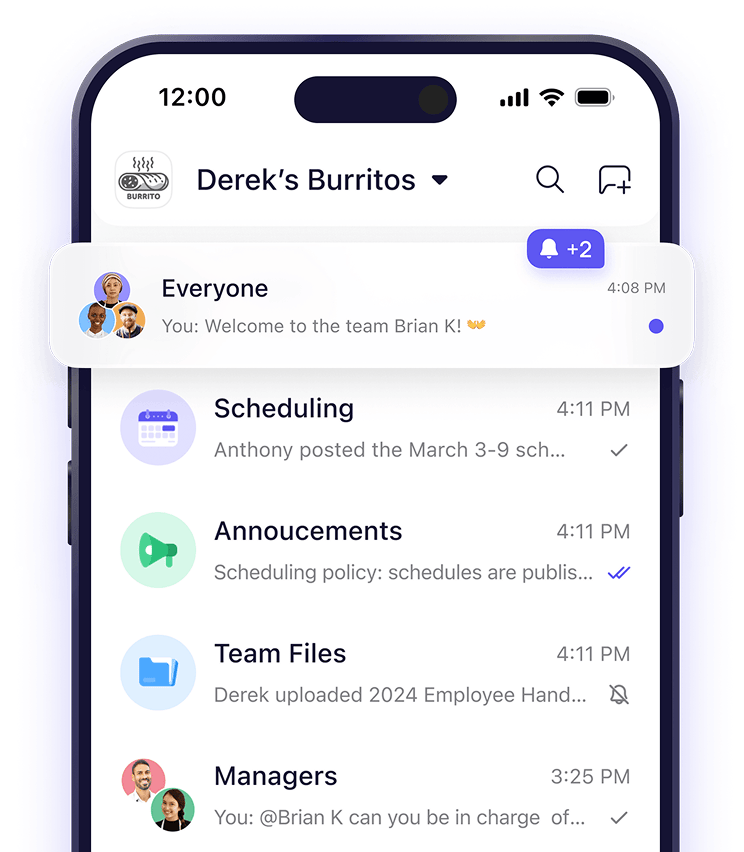
Communication features have become increasingly important. When you need to notify all overnight shift workers about a policy change or remind everyone about open enrollment deadlines, having that communication capability built into the same platform where employee data lives prevents gaps.
Implementation Realities and Cost Considerations
The promise of an HRIS is compelling. The reality of implementation is often messy. You're migrating years of employee data from spreadsheets, file cabinets, and the previous system that never quite worked right.
Successful implementations start with clean data. Before you migrate anything, audit what you have. Find the duplicates, correct the errors, and purge the records for people who haven't worked there since 2019. Garbage in, garbage out applies doubly to systems that will be making automatic calculations affecting people's paychecks.
Pricing models vary widely. Some vendors charge per employee per month. Others have flat fees for different location counts. Be realistic about what you'll actually use rather than paying for modules you'll never implement.
Integration capability matters more than vendors usually admit upfront. Your HRIS needs to talk to your accounting software, your time clock system, maybe your POS if you're in restaurants. Ask specific questions about how data flows between systems and who's responsible when something breaks.
What an HRIS Doesn't Do
It's worth being clear about what core HRIS platforms typically don't handle. They don't create your work schedules (though they'll store them once created). They don't manage shift swaps or open shift sign-ups. They don't facilitate team communication. They don't track task completion or operational checklists.
Those workforce management capabilities exist in dedicated tools or in more comprehensive HRMS platforms, but they're beyond the scope of traditional HRIS software.
Making the Investment Decision
According to the same SHRM workplace report, only 19% of HR executives expect their department will be able to increase headcount, which means most growing businesses will need to solve workforce challenges through better systems, not more people.
Do the math on what manual processes actually cost you. How many hours does your office manager spend each pay period collecting timesheets, checking calculations, and processing payroll? What's your exposure if you miscalculate someone's FMLA eligibility or fail to offer COBRA on time?
For most multi-location businesses with shift workers, the question isn't whether to implement an HRIS, but which one to choose and when to start. The foundational employee data management these systems provide isn't optional in 2025. It's the baseline requirement for running compliant operations at scale.
The right HRIS won't solve every workforce challenge you face, but it will create a solid foundation for everything else you're trying to accomplish. Clean, accurate, accessible employee data enables better decision-making across your entire operation.