Picture this: Maria arrives for her first shift as a line cook at your restaurant. The kitchen is already slammed with lunch prep. The sous chef points vaguely toward the other cooks and says "Everyone, this is Maria. Maria, everyone." Then everyone goes back to chopping, stirring, and plating. Maria spends her first day not knowing anyone's name or who to ask for help. Sound familiar?
The traditional meet-and-greet, a sit-down gathering where the new employee meets everyone at once in a conference room, doesn't work for frontline businesses. Your team doesn't have time to stop working for 30 minutes when customers are waiting. Your shifts don't overlap in ways that get everyone in the same room. Your employees are scattered across multiple locations. The standard corporate approach fails when your workforce is in motion.
But socialization still matters. According to research from Harvard Business Review on onboarding success, new employees who develop strong workplace relationships within their first six months are significantly more likely to stay long-term and report higher job satisfaction. The challenge is creating opportunities for those relationships to form naturally within the constraints of shift work.
Micro-Introductions Throughout the Shift
Instead of one big introduction moment that never happens, build multiple small introduction moments into the first day and week.
Station introductions work perfectly in restaurants and retail. The manager walks the new employee to each station or department and makes a 30-second introduction to whoever's working there. "Marcus, this is DeShawn. DeShawn is training as a new server today. DeShawn, Marcus has been with us for three years and he's our go-to person for handling difficult tables with grace." The introduction includes a name, a context, and a compliment. Then they move to the next station.
This approach serves several purposes: it gives the new employee names attached to faces and locations rather than a blur of people they meet once, it positions the new employee as someone worth introducing rather than an interruption, it provides natural conversational hooks for later interactions, and it happens in real time without stopping operations.
Role-specific introductions focus on the people the new employee will interact with most. A new cashier needs to meet the customer service desk staff, the managers who handle voids and returns, and the security personnel. They don't necessarily need to meet everyone in receiving and inventory on day one. Prioritize proximity and collaboration over comprehensive coverage.
The Team Lunch or Pre-Shift Meal
Many restaurants and service businesses feed their staff before or during shifts. Transform this necessary function into a social integration opportunity.
Schedule the new employee's first day to overlap with the regular staff meal time. Managers or veteran employees should actively invite the new person to sit with them rather than assuming they'll insert themselves into an established group. People are naturally hesitant to join a group where everyone knows each other; explicit invitations overcome that hesitation.
Use meal time for informal conversation, not additional training. Ask the new employee about themselves. Where are they from? What brought them to this job? What do they like to do outside of work? Share similar information about existing team members. These personal details create connections faster than job-related conversations.
The pre-shift meeting that many restaurants and retail stores hold before opening serves a similar function. Include new employees in these meetings even if they won't understand all the content yet. Introduce them to the full group, explain briefly what their role will be, and invite the team to welcome them and offer help. Research from Gallup on team engagement shows that employees who feel welcomed and supported by their team from day one have higher engagement levels throughout their tenure.
The Buddy System Extended
The onboarding buddy concept takes on additional importance for social integration. Beyond training and operational questions, the buddy serves as the new employee's social guide.
Select buddies who are naturally friendly and socially skilled, not just operationally competent. Your best performing employee who barely talks to anyone won't help a new person integrate socially. Your middle-tier performer who knows everyone and makes people laugh might be the perfect buddy for social integration.
Ask buddies to explicitly include new employees in normal social interactions. "Hey, a few of us are grabbing coffee after shift, want to come?" or "On Saturdays we all wear sneakers because the floors get slippery when it's busy." These inclusions and explanations help new employees understand unwritten team culture and feel invited into the existing group dynamic.
Department or Location Tours with Context
Give new employees a tour of your facility, but make it social rather than purely operational. Instead of "This is the walk-in cooler where we store produce," try "This is the walk-in cooler. Jose manages all our produce orders and he's incredibly picky about quality, which is great for us. If you ever can't find something, Jose knows where everything is. Jose, this is Ashley, she's starting as a prep cook today."
The tour becomes a series of brief introductions with context. New employees learn where things are and meet people simultaneously. They start to understand who does what and who to ask for help with different issues.
For multi-location businesses, consider virtual tours of other locations during the first week. A 10-minute video call where the new employee meets managers or key staff at other locations build relationship across the organization and helps them understand how their location fits into the larger operation.
Low-Key Social Events
Formal welcome parties rarely work for shift-based businesses. Scheduling is nearly impossible. Attendance is low. The events feel forced. Low-key, informal gatherings work better.
Post-shift coffee runs, where a few team members grab coffee or a drink after closing, create natural social time without the pressure of a formal event. The manager might say "Anyone want to hit that new coffee place down the street after we close?" and specifically invite the new employee to join.
Weekend shift celebrations mark the end of your busiest shifts with small celebrations. Some restaurants share a pitcher of beer, some retail stores order pizza, some healthcare facilities do ice cream runs. Including new employees in these informal traditions helps them feel like part of the team.
Team competitions during slow periods can break the ice. "Okay, it's dead right now. Let's see who can fold the most napkins the fastest" or "Everyone name the weirdest thing a customer asked for this week." These silly interactions create shared experiences and laughter that bond teams together.
One-on-One Coffee Chats
For slightly larger operations or management positions, schedule brief one-on-one coffee chats between the new employee and key people they'll work with regularly. These shouldn't be formal meetings. They're 15-20 minute informal conversations over coffee in the break room or at a nearby cafe.
The existing employee shares their story: how long they've been there, what they do, what they enjoy about the work, advice they'd give a new person. The new employee shares their background and asks questions. No agenda beyond getting to know each other.
These conversations work particularly well for positions that require cross-functional collaboration. Your new assistant manager should have coffee with the head cook, the lead server, the morning shift supervisor, and the maintenance coordinator. Those relationships will matter for their success, but they won't develop naturally without creating specific opportunities.
Using Communication Tools Strategically
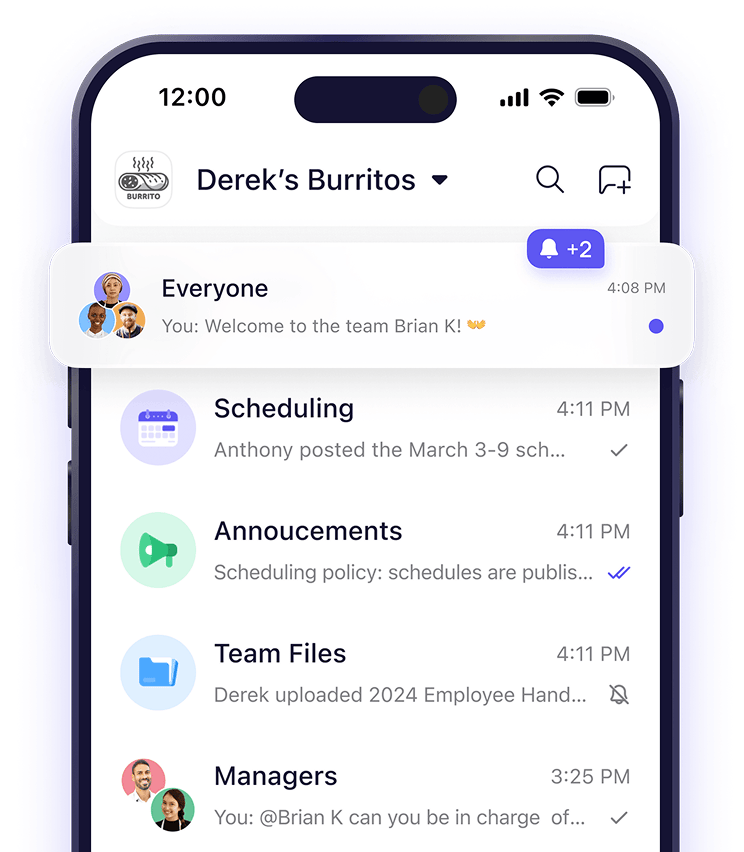
Don't underestimate the power of digital introduction for distributed teams. Creating a group message that introduces the new employee to the whole team with a bit of personality helps everyone feel connected even if they don't work the same shifts.
"Everyone, meet Jasmine! She's starting this week as our new evening shift supervisor. Jasmine comes to us from the retail world, she has two dogs named Pancake and Waffle, and she's excited to bring some fresh energy to our evening operations. Make her feel welcome!"
The existing team can respond with welcome messages, the new employee can start learning names, and everyone feels included in the introduction without requiring physical presence. This works especially well for businesses with multiple locations where people may never meet face-to-face but still need to coordinate work.
Making Introductions Memorable
The psychology of first meetings matters. People forget names immediately unless there's a memory hook. Help new employees (and your existing team) remember each other by adding context to introductions.
Instead of: "This is James, he's a cook."
Try: "This is James. He's been running our grill station for two years and he makes the best steak you'll ever eat. James, this is Rachel, she's training on expo today and she comes from fine dining so she's going to keep us all honest about plating."
The additional context creates multiple memory hooks. When Rachel needs to remember who James is, she can think "grill guy, makes great steak, been here two years." When James needs to remember Rachel, he thinks "new expo person, fine dining background, particular about plating." These details stick better than names alone.
The Week-Two Check-In
After the first week's chaos settles, create a specific social check-in opportunity. Maybe it's a brief coffee before a shift or a few minutes in the manager's office. Ask explicitly about social integration:
"How are you feeling about fitting in with the team? Have you been able to start getting to know people? Is there anyone you haven't met yet that you should? Anyone you've been working with who's been particularly helpful?"
These questions signal that social integration matters to the company. They give new employees permission to raise concerns if they're feeling isolated. They provide managers with information about whether their integration strategies are working.
The meet-and-greet for frontline workers isn't a single event. It's a series of small, intentional moments throughout the first days and weeks that help new employees develop relationships with their coworkers. These relationships determine whether they stay or leave, whether they engage or phone it in, whether they feel like part of a team or just another employee showing up for a paycheck. Invest time in facilitating these connections, and you'll see the return in retention and team cohesion.