The Occupational Safety and Health Administration (OSHA) is the federal agency responsible for ensuring safe and healthful working conditions by setting and enforcing standards, providing training, outreach, education, and assistance to employers and workers. Created by the Occupational Safety and Health Act of 1970, OSHA's mission is to prevent work-related injuries, illnesses, and deaths.
For restaurants, retail stores, and service businesses, OSHA compliance isn't optional. It's a legal requirement that protects your employees while helping you avoid costly violations and penalties.
Why OSHA Matters for Your Business
In 2019 alone, full-service restaurants reported 93,800 cases of non-fatal injuries. These aren't just statistics. Each number represents an employee hurt on the job, lost productivity, workers' compensation costs, and potential OSHA violations.
OSHA conducted 34,625 inspections in fiscal year 2024, comprising both unprogrammed inspections initiated by employee complaints, injuries, and fatalities, and programmed inspections targeting high-hazard industries. Your restaurant, retail store, or service business could be next.
The financial stakes are substantial. As of January 2025, OSHA's maximum penalties increased to $16,550 per violation for serious violations and $165,514 per violation for willful or repeated violations. A single inspection can result in multiple citations if you're not compliant.
OSHA's Core Requirements for All Businesses
Every employer covered by OSHA must:
Provide a Safe Workplace The General Duty Clause requires employers to keep their workplace free of serious recognized hazards. This applies even if there's no specific OSHA standard addressing the particular hazard.
Display the OSHA Poster Post the official OSHA "Job Safety and Health: It's the Law" poster in a highly visible area where employees gather. This poster notifies workers of their rights under the OSH Act.
Report Serious Incidents Report any work-related fatality within 8 hours and any work-related inpatient hospitalization, amputation, or loss of an eye within 24 hours.
Keep Records Maintain accurate records of work-related injuries and illnesses using OSHA forms 300, 300A, and 301. Certain high-hazard industries with 100 or more employees must electronically submit detailed injury and illness reports.
Allow Employee Access Provide employees and their representatives access to medical and exposure records related to their work.
Prohibit Retaliation Ensure employees can raise safety concerns or contact OSHA without fear of retaliation.
Common OSHA Violations in Restaurants and Retail
While fall protection tops OSHA's overall most-cited violations list for the 14th consecutive year, restaurants and retail businesses face different primary hazards:
Slips, Trips, and Falls
Restaurant kitchens and dining areas are prone to slippery surfaces from spills, cluttered walkways, and uneven flooring. These violations are among the most common in food service establishments.
Prevention: Clean spills immediately, keep walkways clear, ensure adequate lighting, use slip-resistant flooring, and provide slip-resistant footwear.
Personal Protective Equipment (PPE)
OSHA requires employers to provide appropriate PPE when necessary to protect employees from cuts, burns, and other hazards. Common violations include failing to provide or enforce the use of cut-resistant gloves, burn protection, slip-resistant footwear, and eye protection.
Prevention: Assess hazards in each role, provide necessary PPE at no cost to employees, train employees on proper use, and enforce PPE requirements consistently.
Hazard Communication
The Hazard Communication Standard ensures employees understand the chemicals they work with. Restaurants and retail stores must maintain a written hazard communication program, provide training on hazardous chemicals, label containers properly, and keep Safety Data Sheets (SDS) readily available.
Prevention: Create and maintain a written HazCom program, train employees during onboarding and when new chemicals are introduced, ensure all chemical containers are properly labeled, and keep SDS accessible in a designated location.
Burns and Heat Hazards
Employees working around fryers, ovens, microwaves, ranges, and other heating equipment face burn risks from hot oil, open flames, steam, and hot surfaces.
Prevention: Train employees on safe handling procedures, ensure equipment guards are in place, provide adequate PPE, and establish protocols for safely opening equipment lids and handling hot items.
Cuts and Lacerations
Food slicers, meat grinders, knives, and other cutting equipment cause frequent injuries. Machine guarding violations occur when proper guards are missing or improperly maintained.
Prevention: Install proper guards on all equipment, train employees before allowing them to operate machinery, enforce lockout/tagout procedures for maintenance, and provide cut-resistant gloves for knife work.
Improper Lifting and Ergonomics
Sprains and strains are the most common restaurant injuries. Employees lift heavy boxes, kegs, pots, and equipment without proper training or mechanical aids.
Prevention: Train employees on proper lifting techniques, provide mechanical aids like hand trucks and dollies, limit the weight of items employees must lift, and encourage team lifting for heavy objects.
The OSHA Inspection Process
OSHA inspections typically occur without advance notice. Understanding the process helps you respond appropriately:
Opening Conference
The OSHA compliance officer presents credentials, explains the reason for the inspection, and outlines the scope. You have the right to have a representative present and can request an inspection warrant.
Walkaround
The inspector tours your facility, examining work areas, equipment, and practices. Both employer and employee representatives may accompany the inspector. Employees can speak privately with the inspector about hazards and concerns.
Closing Conference
The inspector discusses findings with you, though they typically don't issue citations on-site. Citations arrive by certified mail, usually within six months of the inspection.
Citation and Penalties
If violations are found, you receive a Citation and Notification of Penalty. You must post the citation near where the violation occurred for 20 days or until corrected, whichever is longer. You have 15 working days to contest the citation or request an informal conference with OSHA.
Types of Violations and Penalties
OSHA classifies violations by severity:
Serious: A substantial probability that death or serious physical harm could result from the hazard. Maximum penalty: $16,550 per violation.
Willful: The employer intentionally and knowingly violated OSHA requirements or showed plain indifference to employee safety. Maximum penalty: $165,514 per violation.
Repeat: The same or substantially similar violation occurred within five years at the same establishment. Maximum penalty: $165,514 per violation.
Failure to Abate: The employer didn't correct a previously cited violation by the specified date. Penalty: $16,550 per day beyond the abatement date.
Other-Than-Serious: A violation that has a direct relationship to job safety but probably wouldn't cause death or serious physical harm. Maximum penalty: $16,550 per violation.
Staying Compliant: Practical Steps
Conduct Regular Safety Audits Walk through your facility regularly with safety in mind. Look for hazards before OSHA does. Document your inspections.
Train Employees Thoroughly OSHA requires training on job-specific safety hazards. Train during onboarding and whenever new equipment, chemicals, or procedures are introduced. Document all training with dates, topics, and attendees.
Create a Safety Culture Encourage employees to report hazards without fear of retaliation. Make safety a regular topic in team meetings. Recognize employees who identify and correct safety issues.
Maintain Required Documentation Keep injury and illness records current, maintain Safety Data Sheets for all chemicals, document safety training, and retain equipment maintenance records.
Respond to Employee Concerns Take employee safety complaints seriously and investigate them promptly. Document your response and any corrective action taken. This demonstrates good faith and may prevent formal OSHA complaints.
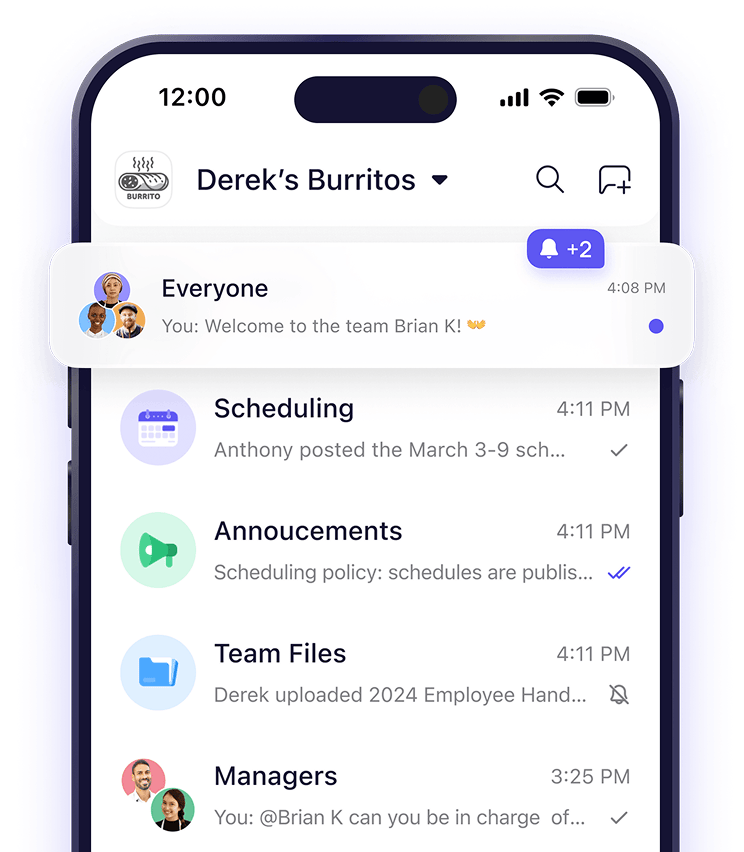
Use Technology to Streamline Compliance Platforms like Breakroom help maintain compliance by facilitating safety training through accessible mobile communication, documenting when employees complete required training, enabling quick reporting of safety concerns, and keeping teams informed about safety updates and procedures.
The Cost of Non-Compliance
Beyond direct OSHA penalties, violations carry hidden costs:
- Increased workers' compensation insurance premiums
- Medical expenses for injured employees
- Lost productivity during investigations and abatement
- Recruitment and training costs to replace injured workers
- Potential damage to your reputation
- Legal expenses if violations result in serious injury or death
In 2024, OSHA issued penalties exceeding $1 million to at least eight companies and levied penalties of $100,000 or more against 449 employers. These numbers demonstrate that OSHA takes enforcement seriously.
Resources for Compliance
OSHA provides extensive free resources to help employers comply:
OSHA Website Search standards, access training materials, and find industry-specific guidance.
OSHA Training Institute Offers courses on various safety topics, including many available online.
On-Site Consultation Program Free and confidential safety and health consultations for small and medium-sized businesses. This is separate from enforcement and doesn't result in penalties.
Young Workers Resources Specific guidance for restaurants and businesses that employ workers under 18, covering hazardous occupations and youth employment requirements.
The Bottom Line
OSHA compliance protects your most valuable asset: your employees. While the standards may seem burdensome, they exist because workplace injuries and deaths remain too common. In restaurants alone, burns, cuts, slips, falls, and strains send thousands of workers to emergency rooms each year.
Compliance doesn't have to be complicated. Start with the basics: display the poster, train your employees, fix obvious hazards, maintain required records, and respond promptly to safety concerns. A proactive approach to workplace safety costs less than reactive responses to violations, injuries, and citations.
Create a culture where safety matters as much as customer service and operational efficiency. Your employees will work more confidently, your insurance costs will decrease, and you'll avoid the disruption and expense of OSHA violations. Most importantly, everyone goes home healthy at the end of their shift.