A skills gap is the difference between the skills your organization needs to achieve its objectives and the skills your current workforce actually possesses. It represents the deficit between required capabilities and available capabilities, whether affecting individual employees, specific positions, or your entire organization. Skills gaps create performance problems, limit growth, and reduce competitiveness.
For frontline businesses where employee capabilities directly affect customer experience and operational efficiency, skills gaps translate immediately into service quality issues and missed opportunities. According to McKinsey workforce research, 87% of organizations report experiencing skills gaps, and these gaps cost businesses an average of 6% of annual revenue through decreased productivity, quality issues, and delayed initiatives.
Identifying Skills Gaps in Your Organization
Individual skills gaps emerge when specific employees lack the knowledge, skills, and abilities needed in their roles. A server who never learned to use your new POS system effectively creates delays. A CNA who struggles with dementia care techniques provides suboptimal patient support. These individual gaps affect that person's performance and require targeted training.
Positional skills gaps occur when all or most employees in a role lack certain capabilities. If none of your shift supervisors know how to create effective schedules that balance labor cost and coverage, you have a positional skills gap requiring systematic training for everyone in that role, not just individuals.
Organizational skills gaps represent capabilities your business needs but lacks across your entire workforce. If you want to launch online ordering but no one on your team has e-commerce expertise, that's an organizational gap requiring external hiring, comprehensive training, or outsourcing.
Symptoms of skills gaps include recurring performance problems despite feedback, customer complaints about specific service aspects, inability to implement new technology or processes, excessive time spent on tasks that should be efficient, managers constantly reworking employee output, high error rates in specific areas, and difficulty promoting from within due to insufficient qualified internal candidates.
Common Skills Gaps in Frontline Industries
Customer service skills remain a persistent gap despite being fundamental to service industries. Many employees struggle to de-escalate upset customers, adjust their interaction style in response to social cues, or balance efficiency with personalization. According to Gallup customer engagement research, poor customer service skills contribute to 37% of customer churn in service industries.
Technology skills increasingly matter as operations digitize. Frontline employees who struggle with scheduling apps, communication platforms, POS systems, inventory management software, or basic smartphone navigation create inefficiencies and resist beneficial changes.
Communication skills affect every interaction. Skills gaps in written communication (shift notes, incident reports, customer messages) and verbal communication (handoffs between shifts, explaining policies to customers) create misunderstandings and errors.
Leadership and supervision skills gaps appear when you promote strong individual contributors without adequate preparation. New supervisors often lack skills in delegating effectively, providing constructive feedback, managing conflict between team members, coaching for improved performance, or making decisions under ambiguity.
Problem-solving and critical thinking skills become more important as automation handles routine tasks. Employees must be able to identify root causes of problems (not just symptoms), generate creative solutions to novel situations, make sound judgments with incomplete information, and adapt procedures when circumstances change.
Conducting a Skills Gap Analysis
Start by identifying the skills your business needs to succeed. Review your strategic plans, customer feedback, operational challenges, and industry trends. What capabilities are critical now? What will you need in the next one to three years? Document these required skills clearly.
Assess your current workforce's capabilities through multiple methods. Use performance review data highlighting recurring skill deficits. Conduct manager surveys asking what skills their teams lack. Deploy employee self-assessments where people rate their own capabilities. Administer skills tests for critical competencies. Analyze error patterns and performance metrics to reveal capability gaps.
Compare required skills against available skills to identify gaps. Create a simple matrix showing each critical skill and the percentage of employees who possess it at required proficiency levels. Skills where fewer than 70% of employees meet requirements represent significant gaps requiring attention.
Prioritize which gaps to address based on business impact and feasibility. High-priority gaps affect critical business outcomes or customer experience. Medium-priority gaps create inefficiencies but don't prevent core operations. Low-priority gaps are nice-to-have capabilities that marginally improve performance. Focus first on high-impact gaps affecting revenue, quality, or safety.
Closing Skills Gaps Through Training and Development
Internal training programs address identified skill deficits through workshops, on-the-job coaching, e-learning modules, job shadowing, and cross-training opportunities. Design training specifically targeting your documented gaps rather than generic programs that might miss your actual needs.
External training brings in specialized expertise for complex skill development. Industry certifications, professional workshops, community college courses, and vendor training (for specialized equipment or software) build capabilities your internal team can't teach.
Mentorship pairs less experienced employees with skilled colleagues for informal skill transfer. A server struggling with wine knowledge can shadow your sommelier. A new supervisor can learn from an experienced manager. Mentorship works especially well for soft skills hard to teach in classroom settings.
Structured development programs create skill-building pathways for career advancement. Management training prepares employees for supervision. Technical certification programs build specialized capabilities. Leadership development teaches strategic thinking and business acumen. These programs systematically close skills gaps while preparing employees for promotion.
On-the-job learning provides immediate application of developing skills. Assign stretch projects requiring employees to use new capabilities with support. Rotate employees through different roles to build versatility. Create opportunities for employees to practice skills in low-stakes situations before applying them in critical moments.
Closing Skills Gaps Through Strategic Hiring
Sometimes training existing employees is less effective than hiring people who already possess needed skills. This is especially true for highly specialized technical skills, capabilities requiring extensive experience to develop, or skills needed immediately without time for development.
Skills-based hiring focuses recruitment on specific capability needs identified in your gap analysis. If your gap analysis reveals insufficient data analysis skills for understanding business metrics, target candidates with proven analytical capabilities regardless of their industry background.
Partnership with educational institutions creates pipelines of pre-skilled workers. Community colleges often customize programs to local employer needs. Apprenticeship programs let you train workers to your exact specifications. These partnerships address long-term skills gaps by developing your future workforce.
Internal recruitment and development reduces skills gaps by growing capabilities within your existing team. People who understand your business need less knowledge transfer and cultural acclimation, allowing focused skill development in identified gap areas.
Preventing Future Skills Gaps
Stay informed about industry trends and emerging skill requirements. Subscribe to industry publications, attend conferences, monitor competitor practices, and track regulatory changes. Anticipate skills you'll need before gaps create problems.
Build learning cultures where continuous skill development is expected and supported. Provide regular training opportunities, offer reimbursement for skill acquisition and application, allocate time for learning during work hours, and link skill development to advancement opportunities. Organizations with strong learning cultures experience 46% fewer skills gaps according to Deloitte human capital research.
Succession planning identifies skills needed for key roles and prepares multiple people to fill them. Don't wait until someone leaves to discover no one else can perform their critical functions. Develop bench strength through cross-training and targeted development.
Regular performance reviews that include skills assessment catch emerging gaps early. If multiple employees show deficits in the same area during reviews, address it systematically before it significantly impacts performance.
Technology's Role in Skills Gap Management
Learning management systems track who has completed which training, monitor skill development progress, and identify persistent gaps where training isn't working. These platforms create visibility into organizational skill levels and training effectiveness.
Skills assessment tools provide objective measurement of capabilities. Online tests verify knowledge. Simulations assess practical skills. These tools supplement manager observations with standardized data.
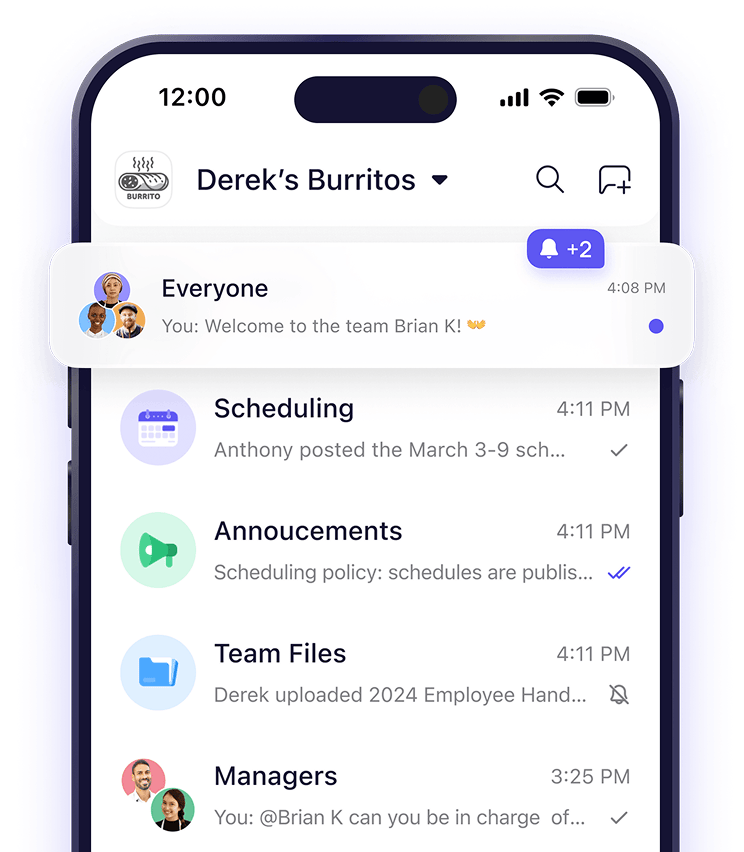
Communication platforms connect employees with learning resources and expert colleagues. When someone needs to develop a skill, they can quickly access training materials, ask questions of knowledgeable coworkers, or find mentors regardless of location. Easy access to knowledge accelerates skill development.
Measuring Success in Closing Skills Gaps
Re-assess skills at regular intervals (quarterly or annually) using the same methods as your initial gap analysis. Compare current workforce capabilities against required capabilities to see if gaps have narrowed.
Be sure to track performance metrics based on the gaps you want to fill. If customer service skills were a gap and you implemented training, monitor customer satisfaction scores and complaint rates. Improvement in outcomes validates that training closed the gap.
Skills gaps never disappear permanently. As your business evolves, technology changes, and customer expectations increase, new gaps emerge. Successful organizations make continuous skills assessment and development part of their regular operations rather than one-time projects. When teams stay connected through effective communication tools, knowledge sharing becomes easier and skills spread more quickly across your workforce, helping close gaps organically through peer learning.