Picture this: You've just made an offer to a great candidate for your assistant manager position. She's currently working in another city and can't come in to sign paperwork. So you email her the offer letter as a PDF. She prints it, signs it, scans it (or takes a barely legible photo with her phone), and emails it back. Then you print it again to file it. The whole process takes two days.
Electronic signature software eliminates this friction by allowing people to sign documents digitally from any device. The technology has been legally recognized for decades, widely adopted across industries, and essential for businesses hiring remotely or operating across multiple locations.
An electronic signature is a digital method of signing documents that carries the same legal weight as a handwritten signature. Electronic signature software facilitates this by presenting documents to signers, capturing their signatures digitally, tracking the signing process, and creating tamper-evident records.
For HR departments, this technology transforms workflows involving offer letters, employment agreements, handbook acknowledgments, benefits enrollment forms, W-4 tax forms, direct deposit authorizations, and performance review documentation.
Why E-Signatures Are Legally Binding
The Electronic Signatures in Global and National Commerce Act (ESIGN Act) passed in 2000 established that electronic signatures have the same legal status as handwritten signatures in most business transactions. The Uniform Electronic Transactions Act (UETA), adopted by nearly all states, provides similar legal standing at the state level.
These laws establish that a contract or signature can't be denied legal effect solely because it's electronic. If you can prove the person intended to sign, the document hasn't been altered, and you have a complete record of the transaction, you've got a legally binding signature.
According to Certinal's 2025 eSignature statistics, contract turnaround times improve by over 75% on average with eSignature adoption, which matters enormously when you're trying to close strong candidates before they accept offers elsewhere.
Common Use Cases in HR Workflows
New hire onboarding generates the highest volume of signatures in most organizations. Between offer acceptance and the first day, new employees need to sign a dozen or more documents. Electronic signature software allows you to bundle these into a single signing session, automatically routing them to the new hire and storing signed copies in your HRIS.
For multi-location businesses, this is transformative. Your new hire in Phoenix doesn't need to drive to your corporate office in Seattle. They complete everything from their phone, and you have fully executed documents within hours instead of days.
Policy acknowledgments happen throughout the year. When you update your harassment policy or implement a new safety procedure, you need employees to acknowledge they've received the changes. Electronic signature tools let you push these to employees' email or mobile devices, track who's signed, and automatically follow up with reminders.
Performance reviews and disciplinary documentation benefit from e-signatures because they create clear audit trails. When an employee signs off on their performance review, the system timestamps the signature and makes alteration nearly impossible.
Benefits enrollment has moved almost entirely to electronic processes. During open enrollment, employees review options, make elections, and sign acknowledgment forms digitally.
What to Look for in E-Signature Software
Not all electronic signature platforms are created equal for businesses with hourly workers. Key capabilities include mobile-first design that works seamlessly on smartphones, simple signing flows that don't require creating accounts, bulk sending for pushing the same document to hundreds of employees, integration with your HRIS so signed documents automatically attach to employee records, templates for frequently used documents, and reminder features that automatically follow up with people who haven't signed.
According to the same Certinal research, 44% of businesses report improved employee satisfaction by reducing manual paperwork through eSignatures, but only if the process is actually easier than printing and signing paper.
The integration piece is critical. True integration means a signed document automatically files itself in the employee's record without manual intervention. Weak integration means you export a file and manually upload it. Understand what integration actually means before you buy.
Implementation Considerations for Shift Workers
Businesses with deskless employees face unique challenges. Your workers might not have company email addresses. They definitely don't sit at computers all day. Many will complete signings on personal devices with varying tech literacy.
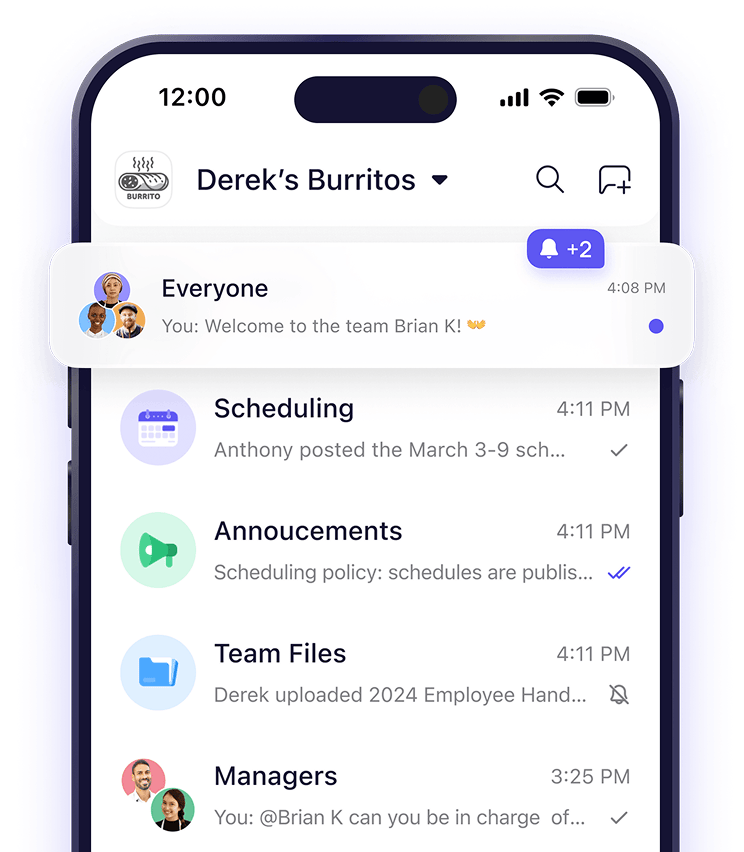
Address the email issue upfront. If employees don't have company email, you'll need to send signing requests to personal email addresses or phone numbers via text message where the platform supports it. An employee messaging tool like Breakroom provides a consistent method to ensure all employees get the message and are able to respond.
Make the signing process as simple as possible. Choose platforms that don't require account creation. The employee should receive a link, click it, review the document, sign with their finger or stylus, and be done.
Provide clear instructions before the first signing request. A brief video or one-page guide showing exactly what to expect prevents confusion.
Plan for employees who won't complete it the first time. Build reminder sequences into your workflow. For most communications, this means three reminders over five to seven days before manual follow-up.
Security and Compliance Essentials
Electronic signature software must meet specific security standards to protect sensitive employee information. Look for platforms that use encryption both in transit and at rest, maintain detailed audit trails showing who accessed what when, authenticate signers through email or SMS verification, prevent tampering through cryptographic seals, and comply with SOC 2 security standards.
The audit trail is particularly important for HR documents. You need to prove that a specific person signed a specific document at a specific time, and that the document hasn't been altered since signature. Quality platforms generate audit certificates that detail every step of the signing process.
Cost and ROI Calculation
Electronic signature platforms typically charge per user per month or per envelope (document package) sent. Pricing ranges from $10-50 per user per month for basic plans to several hundred dollars monthly for enterprise features.
Calculate ROI based on time savings and error reduction. How many hours per month do you spend printing, scanning, tracking down signatures, and filing documents? Factor in the cost of errors, like missing signatures, lost documents, or delayed hires.
According to TextControl's 2025 adoption research, 60-80% of organizations have adopted some level of e-signature technology as of 2025, with adoption driven primarily by efficiency gains and improved employee experience.
What E-Signatures Don't Solve
Electronic signature software streamlines the signing process, but it doesn't solve underlying documentation problems. If your employment agreements are poorly written, e-signatures just make you execute bad contracts faster.
You still need someone to prepare documents, determine who needs to sign what, follow up on incomplete paperwork, and maintain your overall HR processes. The software handles the signing mechanics, not the judgment calls.
Some documents still require wet signatures in certain circumstances. While I-9 Section 1 can be completed electronically under specific conditions, Section 2 typically requires in-person verification of documents. Notarized documents may require different processes. Verify the specific requirements for your critical documents before assuming everything can go fully electronic.
Making the Transition
Start by identifying your highest-volume signing workflows. For most organizations, that's new hire onboarding documents. Begin there rather than trying to convert everything simultaneously.
Train your hiring managers on the new process. They'll need to understand how to prepare documents for signature, track completion, and what to do when someone doesn't complete signing on time.
Communicate clearly with employees about the change. People are generally receptive once they understand the process, but the first time they receive a signature request via email, they may be confused.
Monitor adoption and completion rates. If certain documents or groups of employees have low completion rates, investigate why. The problem might be unclear instructions, poor mobile experience, or unnecessarily complex documents.
For businesses managing hourly workers across multiple locations, electronic signature software represents one of the highest-value technology investments you can make. It eliminates geographic constraints from hiring, creates consistent processes, reduces administrative burden, improves employee experience, and creates better documentation and audit trails.