A hiring manager checklist is a structured tool that outlines every step required to fill an open position, from identifying the need through extending the job offer. For managers juggling operational responsibilities alongside recruiting, a checklist prevents critical steps from falling through the cracks and ensures consistent, legally compliant hiring.
According to SHRM talent acquisition data, organizations using standardized hiring checklists reduce time-to-fill by 18% and report 27% fewer compliance errors compared to those with informal processes.
Sample Hiring Manager Checklist
PHASE 1: POSITION APPROVAL & PREPARATION
Job Requisition (Week 0)
- [ ] Complete job requisition form with business justification
- [ ] Document budget information and proposed compensation range
- [ ] Identify if replacement or new position
- [ ] Submit to appropriate approvers (HR, Finance, Department Head)
- [ ] Track approval status and follow up if needed
- [ ] Receive final approval before proceeding
Job Description Review (Week 0-1)
- [ ] Retrieve current job description for role
- [ ] Review and update responsibilities if role has evolved
- [ ] Verify physical requirements are accurate
- [ ] Confirm required vs. preferred qualifications
- [ ] Update schedule and working conditions details
- [ ] Add current compensation range
- [ ] Have HR review for legal compliance
- [ ] Get final approval on revised description
Compensation & Budget (Week 0-1)
- [ ] Research current market rates for position
- [ ] Review internal equity with similar positions
- [ ] Determine starting wage or salary range
- [ ] Calculate total compensation including benefits
- [ ] Confirm budget allocation covers full cost
- [ ] Document justification if exceeding standard range
Interview Team Assembly (Week 1)
- [ ] Identify 2-3 people to participate in interviews
- [ ] Confirm their availability for interview blocks
- [ ] Schedule interview training if team members are new to interviewing
- [ ] Assign specific competency areas for each interviewer to assess
- [ ] Block calendar time for interviews (estimate 2-3 weeks out)
PHASE 2: RECRUITMENT
Internal Posting (Week 1-2)
- [ ] Determine if internal posting is required by policy
- [ ] Post on internal job board for specified period (typically 5-10 days)
- [ ] Send announcement via email and communication platforms
- [ ] Post in physical locations (break room, manager office)
- [ ] Set internal application deadline
- [ ] Review internal applications as they arrive
External Posting (Week 1-3)
- [ ] Post on primary job boards (Indeed, company website)
- [ ] Post on industry-specific sites if applicable
- [ ] Share on company social media channels
- [ ] Send to employee network for referrals
- [ ] Set external application deadline
- [ ] Monitor posting performance and adjust if needed
Candidate Sourcing (Ongoing)
- [ ] Review employee referrals
- [ ] Check previous applicant pool for qualified candidates
- [ ] Reach out to passive candidates if needed
- [ ] Partner with staffing agencies if appropriate
- [ ] Contact trade schools or training programs
PHASE 3: SCREENING & SELECTION
Application Review (Week 2-3)
- [ ] Create screening rubric based on job description
- [ ] Review applications against minimum qualifications
- [ ] Sort into: Qualified, Maybe, Not Qualified
- [ ] Document screening decisions with brief notes
- [ ] Identify top 8-12 candidates for phone screens
Phone Screening (Week 2-3)
- [ ] Prepare standard phone screen questions:
- Verify schedule availability matches role requirements
- Confirm salary expectations within budget range
- Ask 2-3 basic qualification questions
- Assess communication skills and interest level
- [ ] Conduct 15-minute screens with qualified candidates
- [ ] Take notes during each call
- [ ] Select top 4-6 candidates for in-person interviews
- [ ] Send rejections to screened-out candidates
Interview Preparation (Week 3)
- [ ] Develop structured interview questions (8-10 questions)
- [ ] Create interview evaluation form with rating criteria
- [ ] Prepare job-realistic scenarios or skills assessments
- [ ] Print candidate resumes for interview team
- [ ] Prepare folder with: questions, evaluation forms, job description
- [ ] Confirm interview schedule with team members
Interviews (Week 3-4)
- [ ] Send interview invitations with clear instructions:
- Date, time, location
- Who they'll meet with
- What to bring (ID, certifications, portfolio)
- Parking or access instructions
- Expected duration
- [ ] Conduct interviews using prepared questions
- [ ] Take detailed notes on responses
- [ ] Complete evaluation forms immediately after each interview
- [ ] Have all interviewers submit ratings within 24 hours
- [ ] Assess cultural fit and team compatibility
Skills Assessment (Week 3-4, if applicable)
- [ ] Schedule working interview or skills demonstration
- [ ] Prepare materials needed for assessment
- [ ] Brief staff on what's happening and their role
- [ ] Observe candidate performing job tasks
- [ ] Document performance on assessment criteria
- [ ] Debrief with observing team members
PHASE 4: REFERENCE CHECKS & SELECTION
Reference Checks (Week 4)
- [ ] Request 2-3 professional references from top candidates
- [ ] Verify contact information is current
- [ ] Prepare reference check questions:
- Verify employment dates and title
- Ask about performance and strengths
- Inquire about areas for development
- Confirm eligibility for rehire
- Ask about attendance/reliability
- [ ] Call references and document responses
- [ ] Flag any concerning information for follow-up
- [ ] Complete checks on all finalists before deciding
Final Selection (Week 4)
- [ ] Compare all candidates using evaluation data
- [ ] Review interview scores, skills assessments, references
- [ ] Discuss top 2-3 candidates with interview team
- [ ] Make final selection decision
- [ ] Document decision rationale
- [ ] Identify backup candidate in case offer is declined
Background & Screening (Week 4-5)
- [ ] Determine which checks are required:
- Criminal background check
- Drug screening
- Motor vehicle record (if driving)
- Education/credential verification
- Professional license verification
- [ ] Send candidate to screening provider
- [ ] Review results when received
- [ ] Address any issues or discrepancies
- [ ] Get final clearance before extending offer
PHASE 5: OFFER
Offer Preparation (Week 5)
- [ ] Calculate exact compensation (hourly rate or salary)
- [ ] Determine start date (allow 2 weeks for notice period)
- [ ] Specify schedule and location
- [ ] List benefits and when they begin
- [ ] Note any contingencies (background check, drug test)
- [ ] Prepare written offer letter
- [ ] Get offer approved by HR and Finance if required
Offer Extension (Week 5)
- [ ] Call candidate to extend verbal offer
- [ ] Review compensation, schedule, start date
- [ ] Answer any questions
- [ ] Send written offer letter via email
- [ ] Set deadline for acceptance (typically 48-72 hours)
- [ ] Confirm they understand contingencies
Offer Response (Week 5)
- [ ] Receive signed offer letter
- [ ] Send welcome email with next steps
- [ ] Notify HR to begin new hire paperwork
- [ ] Add to new hire list with start date
- [ ] Update applicant tracking system
- [ ] Close out job posting
- [ ] Send rejection letters to other finalists
- [ ] Thank interview team for participation
If Offer Declined:
- [ ] Ask for feedback on why they declined
- [ ] Immediately contact backup candidate
- [ ] Extend offer to second choice
- [ ] If no backup, determine if you need to re-recruit
PHASE 6: PRE-START COORDINATION
Pre-Start Preparation (Week 5-6)
- [ ] Confirm start date with new hire
- [ ] Send welcome packet
- [ ] Order uniform, name tag, or equipment if needed
- [ ] Set up system access (POS, scheduling, email)
- [ ] Assign employee number/ID
- [ ] Prepare workspace or locker
- [ ] Update master schedule with new hire
- [ ] Notify team about new employee starting
Training Setup (Week 5-6)
- [ ] Identify training schedule for first week
- [ ] Assign onboarding buddy or mentor
- [ ] Block time on schedule for orientation
- [ ] Prepare training materials and checklists
- [ ] Ensure trainers know they're assigned
- [ ] Plan first-week schedule (shorter shifts to accommodate training)
Final Confirmation (Week 6)
- [ ] Call or text new hire 2-3 days before start
- [ ] Confirm they're still planning to start
- [ ] Remind them of start time and location
- [ ] Answer any last-minute questions
- [ ] Confirm they have required documents for I-9
Customizing Your Checklist
High-Volume Hourly Hiring: Streamline for speed:
- Reduce phone screen to 5-10 minutes
- Conduct interviews in batches (4-5 candidates in one afternoon)
- Use group interviews for entry-level positions
- Simplify reference checks to employment verification only
- Extend offers same-day to strong candidates
Management/Specialized Positions: Add depth:
- Include panel interviews with multiple stakeholders
- Add working interview or day-long observation
- Conduct 4-5 reference checks instead of 2-3
- Include personality or leadership assessment
- Add final interview with senior leadership
- Build in longer decision timeline
Multi-Location Hiring: Add coordination steps:
- Specify which location the position is for
- Coordinate with location manager on interview scheduling
- Ensure local compliance requirements are met
- Copy location manager on all candidate communications
- Arrange site visit if candidate will interview at different location
Using Your Checklist Effectively
Keep your master template in a shared location where all hiring managers can access it. Customize copies for each open position. Check off items as you complete them to track progress. Note actual completion dates to measure your hiring timeline. Flag items that took longer than expected to identify bottlenecks.
According to Bureau of Labor Statistics hiring data, the median time-to-fill was 24 days as of late 2024. Track your timeline against this benchmark:
- Week 0-1: Approval and preparation (5-7 days)
- Week 1-3: Posting and sourcing (14-21 days)
- Week 3-4: Screening and interviewing (7-10 days)
- Week 4-5: References and selection (5-7 days)
- Week 5-6: Offer and pre-start (7-14 days)
Total: 38-59 days from requisition to start date
If you're consistently exceeding these timelines, identify which phase is causing delays and streamline it.
Common Checklist Pitfalls
Starting without approval. You invest time screening and interviewing only to discover the requisition isn't approved or the budget doesn't exist. Always confirm approval before posting.
Skipping phone screens. You schedule in-person interviews with 10 candidates and discover 6 have disqualifying schedule conflicts or salary expectations. A 10-minute phone call would have filtered them out.
Forgetting reference checks. You make an offer, then discover during references that the candidate was terminated for theft. Always check references before extending offers.
Poor communication with candidates. Candidates accept other offers because you took three weeks to schedule their second interview. Keep momentum through regular communication and quick decisions.
Losing track of where you are. Without a checklist, you might forget to do background checks, schedule training, or notify the team. Structure prevents these gaps.
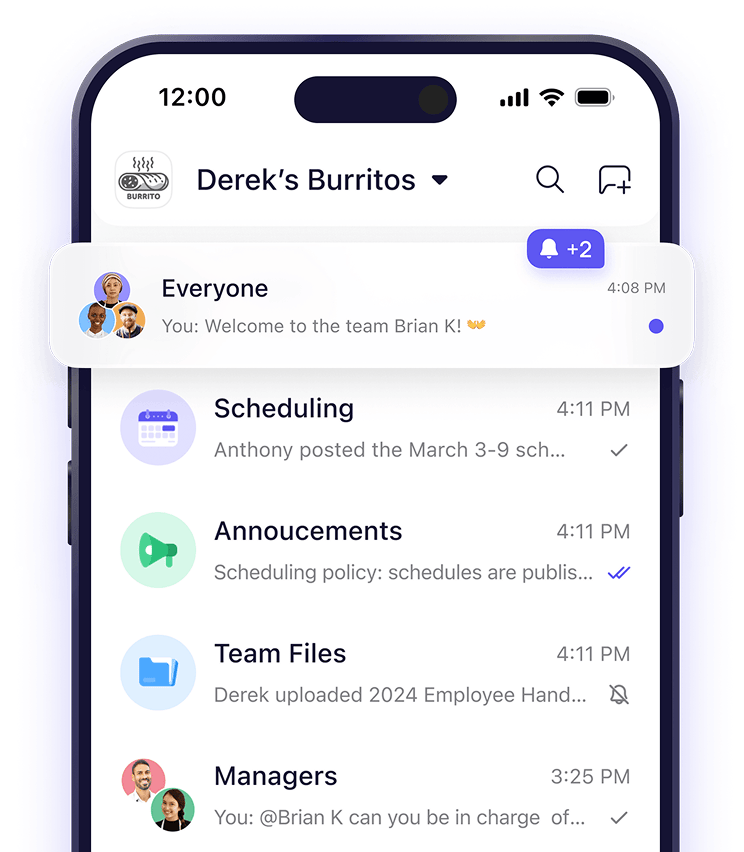
Tools that centralize communication help coordinate the many people involved in hiring. When you can quickly message interview team members, share candidate information, and track where each applicant stands, it keeps hiring moving efficiently. This coordination becomes especially important when hiring for multiple locations with different managers involved at each stage.
Remember that hiring is one of your most important responsibilities. A bad hire costs 30-150% of their annual salary in wasted training, lost productivity, and replacement costs. Taking time to follow a thorough process saves money and builds better teams.