You've run the same help wanted ad for three weeks. You're covering shifts yourself. Your best server just gave notice because the pizzeria down the street offered $2 more per hour and a signing bonus. Meanwhile, the lunch rush is in two hours and you're short two people.
Welcome to staffing in 2025. For shift-based businesses in restaurants, retail, and service industries, keeping positions filled has become one of the most expensive and exhausting parts of operations. But businesses that master modern staffing strategies are building teams that stick around and attract even more of the best.
Unlike office environments where roles remain relatively stable, shift-based staffing involves constant challenges: unpredictable customer traffic, high turnover rates, no-shows, last-minute schedule changes, and seasonal fluctuations that can double or halve your workforce needs within weeks.
The Harsh Reality: Labor Market Numbers for Shift-Based Businesses
The staffing crisis isn't in your head. According to the U.S. Bureau of Labor Statistics, the leisure and hospitality sector continues to face unique workforce challenges, with restaurants and retail experiencing particularly acute staffing pressures.
Current staffing landscape:
- Turnover rates: The hospitality industry experiences annual turnover rates between 70-80%, according to recent industry analysis
- Cost per hire: The average cost to hire a new employee is $4,700 according to SHRM, up 14% from just a few years ago
- Time to fill: It takes an average of 42 days to fill an open position, during which you're either short-staffed or paying overtime to cover shifts
- Job openings: Despite economic fluctuations, the hospitality sector continues to report significant unfilled positions, with millions of job openings competing for the same talent pool
For a restaurant hiring five employees per year, you're spending over $23,500 just on recruitment costs before factoring in lost productivity, training time, and the quality issues that come with chronic understaffing.
Why Staffing Has Become So Difficult
Several converging factors have created a perfect storm for shift-based employers:
1. Competition from other industries
Jobs in logistics, delivery services, and warehouse work often offer better pay, more predictable schedules, and less physically demanding conditions than restaurant or retail positions. Your local pizzeria is competing with Amazon for the same entry-level hourly workers.
2. Changing workforce expectations
After 2025, workers increasingly prioritize flexibility, work-life balance, and predictable schedules. The traditional "we'll text you when we need you" approach to scheduling drives potential employees toward employers who offer advance notice and control over their hours.
3. Demographic shifts
As older workers retire, younger generations entering the workforce have different priorities. They value career development opportunities, benefits, and workplace culture, not just a nice hourly wage.
4. The no-show epidemic
Hospitality worker quit rates have historically been high, and last-minute no-shows force managers to scramble for coverage or work short-staffed, creating a cycle that burns out remaining employees.
The Most Cost-Effective Staffing Strategy: Employee Referrals
Before spending money on job boards, start with your current team. Employee referral programs consistently outperform every other recruitment method at a fraction of the price.
Why referrals work:
- Lower cost: According to industry data, referral programs can reduce cost per hire to under $1,000, compared to the $4,700 average for other methods
- Better quality: SHRM research shows that 88% of employers say employee referrals are their best source of quality applicants
- Faster onboarding: Referred candidates already have insight into your company culture and expectations from the person who referred them
- Longer tenure: Referred employees tend to stay longer than those hired through traditional channels, reducing your turnover costs
How to build an effective referral program:
- Offer meaningful incentives: Cash bonuses typically range from $500-$2,500 depending on the role's difficulty and importance. For hard-to-fill positions, consider higher rewards. Pay part of the bonus at hire and the rest after the new employee completes 90 days.
- Make it easy: Don't require essays or complex forms. A simple "who referred you?" question on your application is enough. Employees should be able to share open positions with their network in seconds.
- Promote constantly: Your team can't refer people if they don't know you're hiring. Use your employee communication tools, team meetings, and schedule postings to remind staff about open positions and referral bonuses.
- Cast a wide net: Don't limit referrals to people who have restaurant experience. Skills like customer service, reliability, and work ethic transfer across industries. Your best server might have a friend from their retail job who'd be perfect for your team.
- Celebrate success: When someone gets hired through a referral, announce it publicly. Recognition motivates other employees to participate in the program.
Where to Find Candidates When Referrals Aren't Enough
When your referral network runs dry, you'll need to cast a wider net. Here's where shift-based businesses are finding success:
Job boards and platforms:
Free options:
- Indeed: With over 350 million monthly visitors, Indeed offers free job postings with optional pay-per-click boosts starting at $5 per day to increase visibility
- ZipRecruiter: Free to post with paid options that distribute your listing to 100+ additional job boards
- Google for Jobs: Your job postings can appear in Google search results for free if properly formatted
- Craigslist: Still effective for local, entry-level positions, especially in smaller markets
Industry-specific platforms: For restaurant and hospitality roles, specialized job boards often deliver better-qualified candidates:
- Culinary Agents: Over 1.7 million hospitality professionals; pricing starts at $49 per posting
- Poached Jobs: Strong presence in major cities; $59 for a 30-day full-time posting
- OysterLink: Fast-growing platform specifically for restaurant and hospitality roles
Local recruitment strategies:
Don't underestimate the power of local connections:
- Job fairs: Community colleges, workforce development centers, and chamber of commerce events connect you with local talent
- High schools and colleges: Partner with culinary programs, hospitality courses, or work-study programs
- Community boards: Physical "help wanted" signs still work, especially for walk-in traffic businesses where potential customers see your team in action
- Social media: Post openings on your business Facebook page and Instagram. Your customers often know people looking for work
- Partnerships: Connect with other local businesses to share candidate pools for temporary or part-time roles
Alternative Staffing Models: When Traditional Hiring Isn't Enough
Sometimes you need coverage without the commitment of a permanent hire. Understanding different staffing models helps you fill gaps strategically:
Staffing agencies
Temporary staffing agencies provide workers for short-term needs or trial periods before permanent hire. You'll pay a premium (often 50-100% above the worker's hourly rate), but agencies handle recruitment, screening, and payroll administration. This creates a joint employment relationship where both you and the agency share certain legal responsibilities.
Professional Employer Organizations (PEOs)
A PEO can handle your entire HR function including recruitment support, benefits administration, and payroll. The "co-employment" model means the PEO becomes the employer of record for certain purposes while you maintain day-to-day control. This can be valuable for multi-location businesses that need HR expertise but comes with cost and complexity considerations.
Seasonal employees
Plan ahead for predictable busy periods by hiring seasonal employees. Retail businesses hire for holiday rushes; restaurants hire for summer tourism or special events. Build a pool of reliable seasonal workers you can call back year after year.
Part-time and per diem workers
A mix of part-time employees and per diem workers provides flexibility to scale up and down with demand. Some businesses maintain a core full-time staff supplemented by part-timers who work peak times.
The Interview Process: Moving Fast Without Sacrificing Quality
In a competitive labor market, speed matters. Research shows that candidates drop out if the hiring process takes too long or becomes overly complex.
Streamline your process:
- Respond immediately: When someone applies, reach out within 24 hours. Candidates are applying to multiple places, and the first to contact often wins.
- Phone screen first: A 10-minute phone conversation eliminates obviously unsuitable candidates before you invest time in an in-person interview.
- Make interviews convenient: Offer interview times during morning hours or early afternoon before the dinner rush. Candidates with current jobs need flexibility.
- Use behavioral questions: "Tell me about a time when..." questions reveal how candidates have handled real situations. Focus on reliability, customer service, and teamwork, not just directly relevant experiences.
- Include a working interview: For kitchen or service positions, a paid trial shift shows you how someone actually works, not just how they interview.
- Make offers quickly: If you find someone good, don't wait days to make an offer. Same-day offers for qualified candidates prevent them from accepting offers elsewhere.
Onboarding: The Make-or-Break First 90 Days
According to SHRM research, nearly 90% of employees decide whether to stay with a company within the first six months. Your onboarding process directly impacts retention.
Effective onboarding for shift workers:
Before day one:
- Send a welcome message with first-day logistics: what time to arrive, what to wear, what to bring
- Complete as much paperwork electronically as possible (W-4, I-9 documentation, direct deposit forms)
- Prepare their workspace, name tag, and any necessary equipment
First day:
- Assign an onboarding buddy who can answer questions and provide guidance
- Introduce them to the entire team during a shift meeting or huddle
- Review your employee handbook and key policies
- Set clear expectations for their first week
First 30 days:
- Conduct a 30-day check-in to address concerns and provide feedback
- Ensure they understand how to view schedules, request time off, and communicate with managers
- Introduce them to any employee benefits or recognition programs
First 90 days:
- Hold a 90-day review to assess progress and set goals
- Discuss potential career advancement opportunities within your business
- Make them feel like a valued part of the team, not just another body filling a shift
Retention: It's Cheaper to Keep Them Than Replace Them
With turnover costing $4,700 per employee, retention should be your top priority after hiring. Here's what actually works for shift-based businesses:
1. Pay competitively
You don't need to be the highest-paying employer in town, but you can't be the lowest either. Research what competitors pay and aim for the middle to upper range. According to the National Restaurant Association, 85% of operators have increased wages to attract talent. Show your people that you value their contribution to profits.
2. Offer schedule flexibility
Predictive scheduling laws in several states now require advance notice of work schedules, but you should aim for this even where not legally required. Give employees:
- At least 14 days of schedule advance notice when possible
- The ability to swap shifts easily among themselves
- Consideration for availability and time-off requests
- Consistent schedules for those who want them
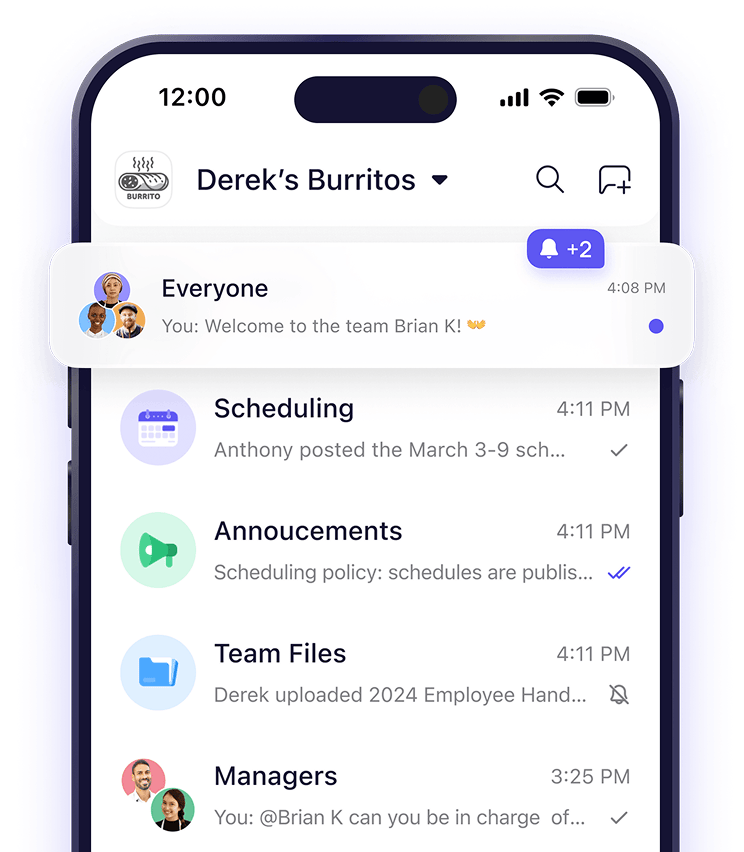
Use scheduling tools that let employees view schedules on their phones, request shift swaps, and get automatic notifications of schedule changes.
3. Create clear career paths
Don't just hire line cooks; hire future sous chefs. Don't just hire cashiers; hire future shift supervisors. Show employees how they can advance:
- Outline promotion criteria clearly (e.g., "after 6 months of strong performance, cooks can train for prep work")
- Provide cross-training opportunities so employees can learn new skills
- Promote from within whenever possible. Seeing coworkers get promoted motivates others.
4. Provide benefits where possible
Even small benefits make a difference:
- Meal discounts or free meals during shifts
- Employee recognition programs like kudos for outstanding work
- Birthday celebrations and milestone acknowledgments
- Paid time off or sick leave even for part-time workers (required by law in many states)
- Access to tip pools or service charges for positions that interact with customers
5. Build a positive culture
Toxic workplaces lose employees fast. Focus on:
- Respectful communication from managers to staff
- Zero tolerance for harassment or discrimination
- Regular team meetings where employees have a voice
- Recognition of good work beyond just "doing your job"
- Addressing problems quickly before they drive people away
6. Use technology to reduce friction
Modern workforce management tools make life easier for both managers and employees:
- Mobile-first scheduling apps so employees can access schedules anywhere
- Automatic shift reminders to reduce no-shows
- Easy time-off request systems
- Team communication platforms for announcements and shift coordination
- Simplified payroll and time tracking that reduces errors
Managing Common Staffing Challenges
No-shows and last-minute cancellations:
- Build redundancy into your schedule when possible (slightly overstaffed is better than under)
- Create an on-call list of employees willing to pick up extra shifts with short notice
- Set clear attendance expectations and follow a progressive discipline policy for chronic issues
- Offer incentives for perfect attendance or picking up emergency shifts
Seasonal demand fluctuations:
- Track your busy and slow periods over multiple years to predict staffing needs
- Develop a reliable pool of seasonal workers you rehire each year
- Cross-train employees so they can fill multiple roles during peak times
- Consider reducing hours during slow periods rather than laying off good workers
High turnover in specific positions:
- If one role turns over constantly, diagnose why (is it the pay, the schedule, the manager, the work itself?)
- Calculate your turnover rate by position to identify problem areas
- Exit interviews with departing employees reveal patterns you can address
- Sometimes the role needs to be restructured or combined with other duties to make it more appealing
Compliance with labor laws:
- Understand overtime requirements and properly classify employees as exempt or non-exempt
- Follow minimum wage laws (federal, state, and local)
- Comply with predictive scheduling laws where applicable
- Properly calculate compensable hours worked, including short breaks and pre-shift prep time
- Maintain required records for payroll and timesheets
Technology That Makes Staffing Easier
Modern staffing goes beyond just finding warm bodies. The right tools help you:
Schedule efficiently:
- Mobile-first scheduling apps that employees can access 24/7
- Templates and copy-paste features to save time creating schedules
- Labor cost forecasting based on sales projections
- Automatic notifications when schedules are published or changed
Communicate effectively:
- Unified team communication platforms that keep work separate from personal phones
- Announcement features for important updates
- Group messaging by role or shift
- Document sharing for training materials and policies
Track and manage:
- Digital time clocks that prevent buddy punching
- Automated overtime alerts
- Leave management for vacation and sick time tracking
- Performance tracking and review reminders
Businesses that invest in these tools report significant improvements in employee satisfaction and reductions in administrative time spent on scheduling and communication.